

 dinero_admin
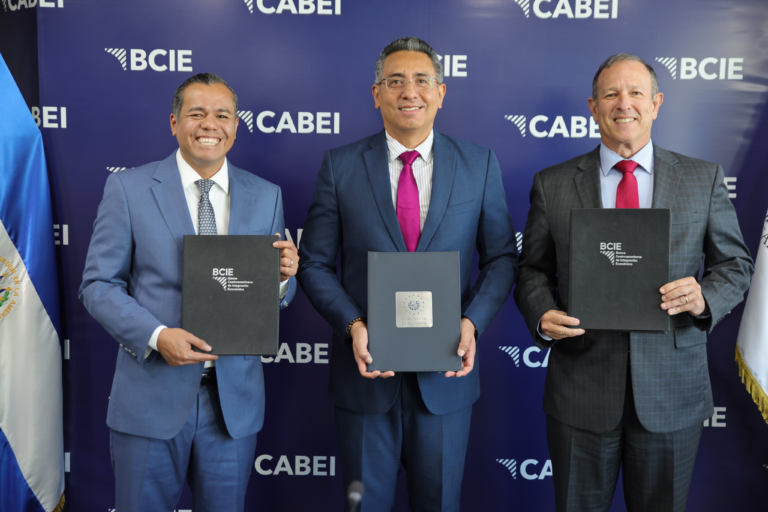
The Central American Bank for Economic Integration (CABEI) and the Government of El Salvador, through the Ministry of Finance, signed a US$155 million loan agreement to implement the Road Infrastructure and Urban Mobility Program – Phase II, an initiative aimed at strengthening the country’s connectivity and improving mobility conditions for millions of salvadorans.
The signing of the agreement marks the formal start of a strategic investment intended to develop infrastructure projects that seek to reduce traffic congestion, expedite travel times, and improve the efficiency of passenger and freight transport. According to projections, the works will directly benefit more than 1.17 million inhabitants.
One of the program’s main components will be the expansion and improvement of the RN13W highway, in the section between the Atiquizaya bypass and the Ahuachapán bypass. The project includes widening the road from two to four lanes and incorporating complementary infrastructure such as bike lanes, sidewalks, pedestrian bridges, drainage systems, and road safety measures.
In addition, the funds will finance the design and construction of the Northern Corridor of the Área Metropolitana de San Salvador (AMSS), Peripheral Ring Road, as well as the design of the Eastern Corridor. These projects are part of a strategy to improve traffic flow in the capital and its surrounding areas, facilitating more efficient connections between different points throughout the country.
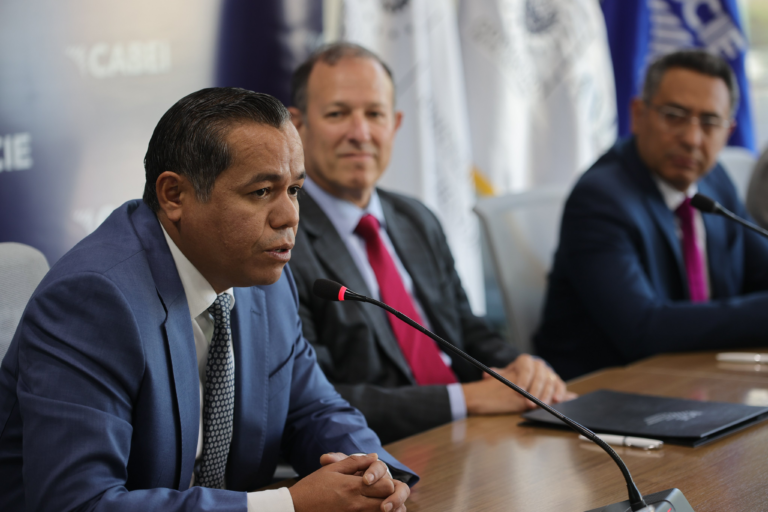
Authorities believe the program will have an impact beyond urban mobility. By strengthening road infrastructure, a reduction in logistics costs for businesses and carriers is expected, which could boost economic competitiveness and regional trade. Furthermore, a more modern road network will contribute to improved access to services, employment opportunities, and productive activities.
With the signing of this agreement, the Central American Bank for Economic Integration (CABEI) reaffirms its support for infrastructure projects considered priorities for the country’s development. The funding will allow progress on projects aimed at meeting the growing demand for transportation and the need for safer, more efficient road corridors adapted to current mobility trends.
You can also read: