

 dinero_admin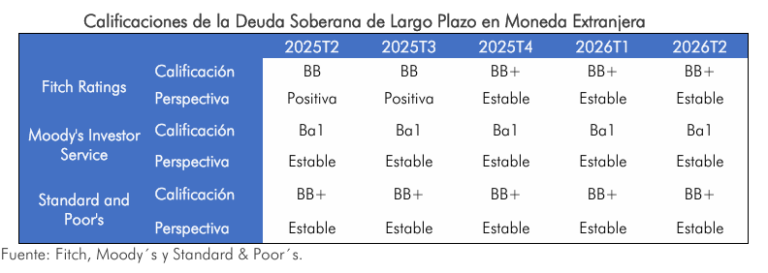
The rating agency Moody’s Investors Service maintained El Salvador’s sovereign rating at B3 and improved its outlook from stable to positive, effective from the first quarter of 2026, according to the most recent Country Risk Report published by the Executive Secretariat of the Secretaría Ejecutiva del Consejo Monetario Centroamericano (SECMCA). The update represents a more favorable assessment of the country’s economic and fiscal prospects, maintaining the risk rating while improving the outlook for its future performance.
The SECMCA document shows that Moody’s retained the B3 rating for the period between the second quarter of 2025 and the second quarter of 2026. However, effective from the first quarter of this year, the agency revised the outlook from stable to positive. Meanwhile, Fitch Ratings maintained the B- rating with a stable outlook, as did Standard & Poor’s, which also maintained the B- rating with a stable outlook.

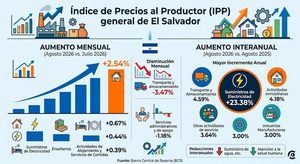
The report also highlights the recent performance of the salvadoran economy. According to data compiled by the SECMCA, the Gross Domestic Product (GDP) registered year-on-year growth of 4.65% during the first quarter of 2026, while the Economic Activity Volume Index (IVAE) increased by 5.78% as of april 2026. Likewise, year-on-year inflation stood at 2.77% at the end of june 2026, indicators that reflect the evolution of the country’s economic activity.
Regarding Fitch’s assessment, the report notes that the rating agency based its decision to maintain its rating on the reduction of financing needs, the easing of financial constraints supported by a program with the International Monetary Fund (IMF), macroeconomic stability supported by dollarization, and a GDP per capita above the regional average. Furthermore, it considers that economic growth and the fiscal consolidation process could be sustained in the coming years, although it warns that challenges related to public debt, the external environment, and the continuation of the IMF program remain.

The report also identifies the decrease in the country’s financing needs, driven by better-than-expected fiscal results, as a positive factor. It also indicates that future rating improvements could occur if economic reforms strengthen the country’s performance, there is greater clarity regarding the fiscal path, and there is a sustained improvement in international reserves.