

 dinero_admin
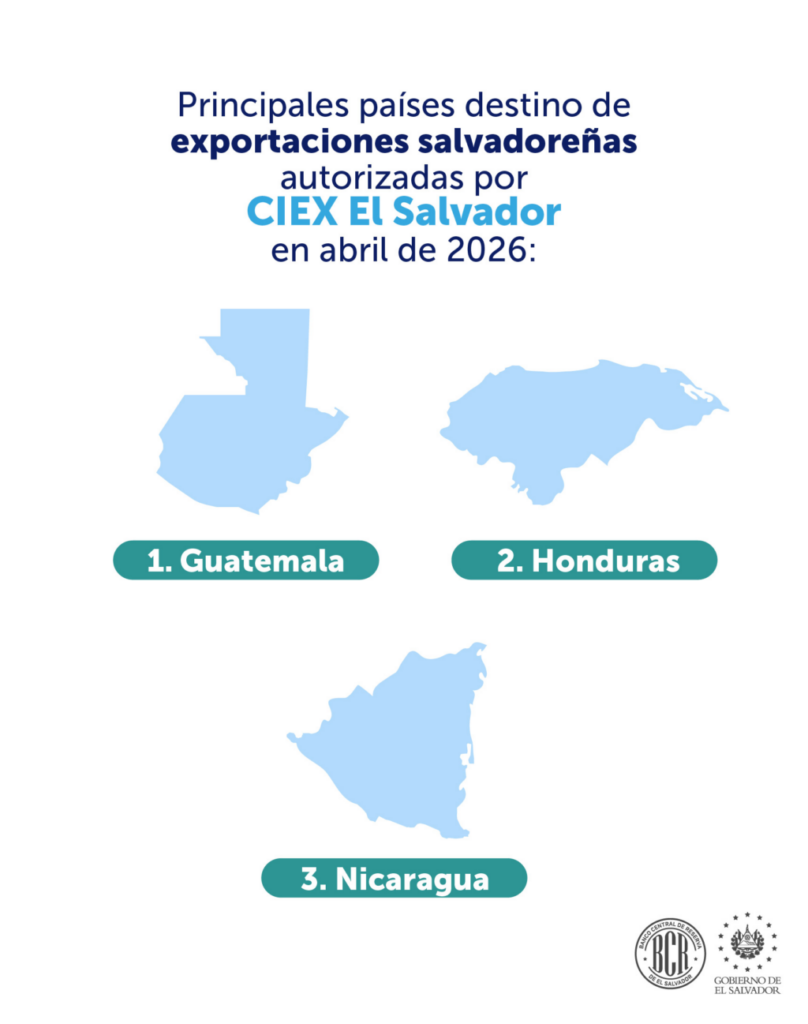
Salvadoran foreign trade continues to strengthen its presence in the Central American region. According to information shared by the Banco Central de Reserva (BCR), the main destination countries for Salvadoran exports authorized by the Centro de Trámites de Importaciones y Exportaciones (CIEX El Salvador) during april 2026 were Guatemala, Honduras, and Nicaragua.
Guatemala positioned itself as the main recipient market for salvadoran products, reflecting the close trade relationship between the two countries. Its geographic proximity, regional economic integration, and the high demand for goods produced in El Salvador have contributed to consolidating this trade.
Honduras ranked second, one of the most important strategic partners for the Salvadoran export sector. The constant flow of goods between the two nations demonstrates the dynamism of intraregional trade and the importance of trade agreements that facilitate the exchange of products.
Nicaragua ranked third among the most important destinations for exports authorized by CIEX during the analyzed period. This market continues to represent a significant opportunity for Salvadoran companies seeking to expand their presence within Central America.
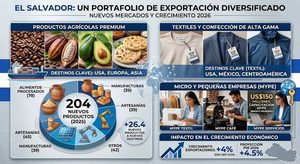
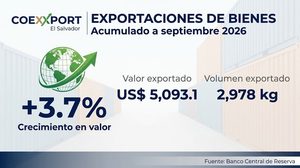
Exports are one of the main drivers of the national economy, generating employment, boosting local production, and strengthening the competitiveness of businesses. The leading position of Central American countries among the top trading destinations demonstrates the importance of the regional market for El Salvador’s economic growth.
CIEX El Salvador plays a key role in this process by facilitating and streamlining procedures related to exports and imports, providing services that contribute to improving the efficiency of foreign trade and strengthening the country’s export capacity.
Authorities invite business owners, exporters, and individuals interested in international trade to learn more about the services, tools, and procedures available through CIEX El Salvador, a platform that aims to simplify processes and promote greater business opportunities for the national productive sector.
You can also read: