

 dinero_admin
The international coffee market is experiencing a downturn driven by expectations of higher global supply—a scenario that is also significant for El Salvador, as its coffee is included in the certified inventories on the New York Stock Exchange. According to data from the Instituto Salvadoreño del Café (ISC), certified inventories reached 233,479 60-kilogram bags as of september 16, 2026, up from 217,646 bags at the previous close.
This increase represents an additional 15,833 bags, or approximately 7.3% more than the previous figure. Within these certified stocks, 868 bags are of salvadoran origin, while another 48,745 bags are listed as pending. For the national coffee sector, the movement of these inventories serves as a benchmark for the bean’s availability in one of the key international futures markets.
The global supply outlook is a primary factor influencing prices. According to the ISC report, the Organización Internacional del Café (OIC) projects record production of 183.6 million bags for the 2025/26 cycle, a 4.4% year-on-year increase. In contrast, global consumption is estimated at 180.6 million bags, resulting in a surplus of nearly 3 million bags.
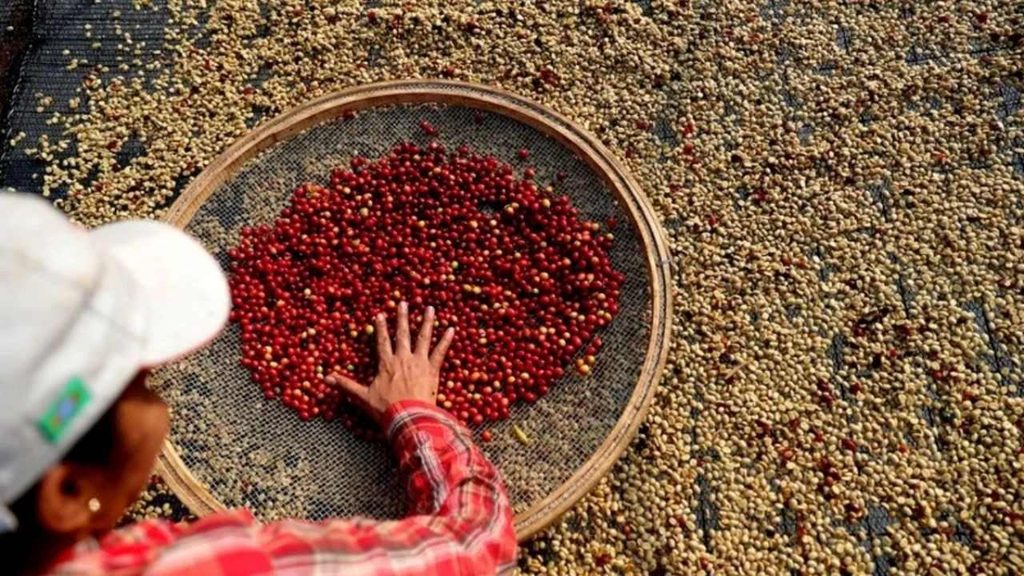
From an economic perspective, this potential surplus suggests that production could exceed consumption for the first time in five years. Greater product availability tends to put downward pressure on international prices—a trend that can impact the commercial environment in producing countries, including El Salvador. However, the report does not specify the price salvadoran producers will receive because of this scenario.
Expectations are also linked to brazilian production. The ISC cites RaboResearch Food & Agribusiness, noting that favorable weather conditions and early flowering in some producing regions have improved the outlook for the brazilian 2027/28 crop. The prospect of increased production in a key global coffee market reinforces forecasts of a larger international supply.
Futures prices reflect this pressure. The coffee contract expiring in december 2026 closed at 281.55, a decrease of 2.10 from the previous session. Contracts for march, may, july, and september 2027 also ended lower, closing at 273.35, 270.30, 268.65, and 266.95, respectively.
For El Salvador, international market trends are significant because coffee is a product destined for export, and its prices are linked to global trading conditions. The ISC report notes the presence of 868 salvadoran bags within certified inventories, indicating that some domestic coffee participates in this trading circuit. However, the document does not provide information on export revenues, production costs, or margins for salvadoran coffee growers; therefore, these impacts cannot be quantified based on this data.
The scenario presented by the ISC thus combines two economic signals: an increase in certified inventories in New York and expectations that global production will exceed consumption. With futures closing lower and forecasts pointing to increased supply, the international coffee market faces downward pressure on prices. For El Salvador, the evolution of these factors will be relevant to the coffee sector’s commercial performance, particularly as results from upcoming harvests become known and global supply and demand conditions shift.
You may also read: