

 dinero_admin
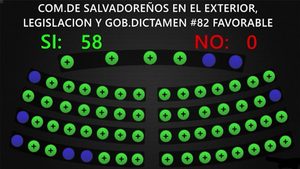
The Legislative Assembly has approved, with 56 votes, an amendment to the Law Establishing the Centro Nacional de Tecnología Agropecuaria y Forestal (CENTA). This amendment will allow the institution to create a registry for the cacao sector and its production units, with the goal of identifying the various participants in this activity and facilitating their access to support programs, technical assistance, and market opportunities.
The modification is part of an update to CENTA’s governing regulations since 1993, aimed at expanding the institution’s mandate and aligning its functions with the scientific, technological, productive, and environmental changes that have occurred over the last few decades.
Under this reform, the cacao sector registry will be open for voluntary and free-of-charge enrollment by producers, marketers, processors, and other stakeholders involved in the industry. Its operation will be governed by regulations to be issued by CENTA, which will also be responsible for organizing information regarding the individuals and production units that make up this sector.
A primary objective of this tool is to ensure that registered participants can access the programs and services implemented by the institution to foster the development of cacao production. These include technical guidance, technology transfer, training, and specialized assistance.
Furthermore, the registry aims to help producers and other members of the cacao supply chain strengthen their capabilities and secure better opportunities to connect with both domestic and international markets. In this way, CENTA will be able to maintain data on the sector and tailor its support initiatives to the specific needs of its participants.
Expanded mandate for CENTA
The reform also broadens the institution’s authority to provide specialized scientific and technical services, as well as to carry out certification processes aligned with its objectives and functions. These expanded powers are intended to strengthen CENTA’s role in the research, development, transfer, and extension of agricultural and forestry technologies.
Among its functions, CENTA is tasked with producing, reproducing, acquiring, distributing, and commercializing seeds, plant material, phytogenetic material, bio-inputs, and various products, goods, and services related to agricultural, livestock, and forestry development. Its work is aimed at contributing to increased production and meeting the food needs of the population, as well as supporting exports and the national agro-industrial sector.
Another change involves the addition of the Minister of Foreign Affairs and the President of the National Council for Science and Technology to the institution’s Board of Directors. This body will also have expanded authority regarding institutional planning, the approval of plans and budgets, and other responsibilities.
With these modifications, CENTA will have new tools to strengthen its services and support various productive sectors, including the cocoa sector, by registering participants and providing access to technical assistance, training, and technology transfer.
You may also read: