

 dinero_admin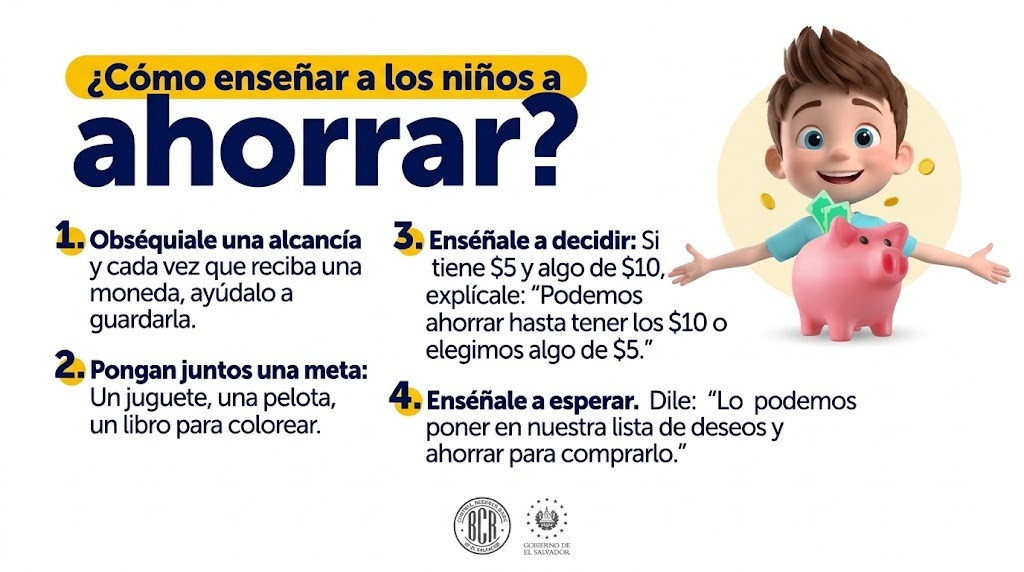
The Banco Central de Reserva highlighted the importance of introducing financial education to children at an early age, focusing on fundamental concepts such as saving, decision-making, and expense planning.
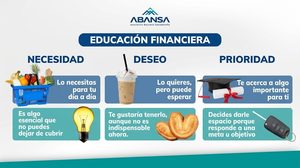
According to the BCR, this learning process can begin with a simple idea: teaching children that they cannot always buy everything the moment they want it. This helps them understand that they can choose how to use their money, or save it, to achieve a future goal.
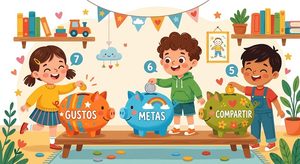
One recommendation is to give them a piggy bank and turn saving into a regular habit. Whenever a child receives a coin, parents or guardians can help them put it away, allowing them to watch the funds allocated for their goals grow.
The BCR also suggests setting a savings goal together with the children, such as buying a toy, a ball, or a coloring book. Having a concrete objective can help them understand, in practical terms, why it is important to set aside some of their money.
Another lesson involves teaching them to make decisions based on the money they have available. For instance, if a child has US$5 and wants an item costing US$10, it can be explained that they can either save up the full US$10 or choose something costing US$5 right then.
This exercise also teaches them that having money does not necessarily mean spending it immediately. The BCR recommends that parents help children identify when they can make a purchase and when they need to wait and save up to get what they want.
The institution also suggests teaching patience using a wish list. If children want something they cannot buy now, they can write it down and view saving as a way to achieve that goal later on.
In this way, simple actions such as using a piggy bank, setting goals, making purchasing decisions, and learning to wait can help children develop saving habits and a more responsible approach to money management from an early age.
You may also want to read: