


 dinero_admin

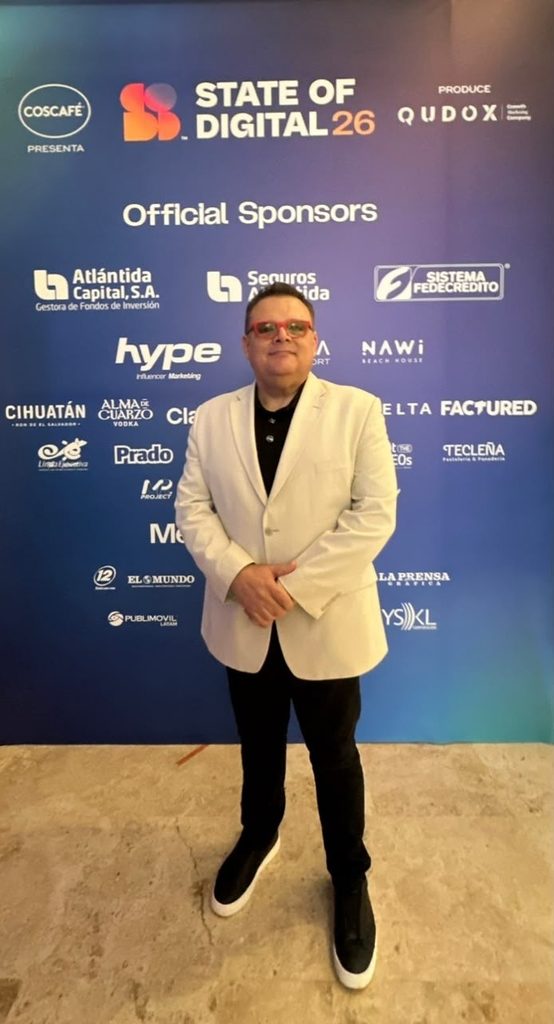
Artificial intelligence (AI) is beginning to play a role in the purchasing decisions of salvadoran consumers, while trust and transparency are becoming key factors for brands. This is according to the study State of Digital 2026: The Economy of Trust, presented by QUDOX during the ninth edition of its annual event, which brought together more than 1,300 attendees at the Hilton San Salvador hotel.
The study, based on over 1,000 responses, analyzes shifts in the behavior of connected consumers, the influence of digital platforms, and the challenges companies face when incorporating new technologies. The findings show that purchasing decisions are increasingly linked to searching for information online and using artificial intelligence tools.
AI gains ground in the purchasing process

According to the results, 87% of participants begin their search for information online before making a purchase, while 37% use artificial intelligence tools. Among those who utilize this technology, 22% stated that they discovered a brand, product, or service through the responses provided by AI.
Furthermore, 19% of AI users acknowledged that they changed previously planned purchasing or consumption decision. These data indicate that digital tools are not merely for gathering information; they can also influence the options consumers consider before purchasing a product or contracting a service.
For companies, this behavior presents a challenge: beyond maintaining a presence on traditional digital channels, they must understand how consumers find information and how the responses generated by artificial intelligence can intervene in their purchasing journey.
Trust becomes a competitive factor
The study also identifies shifts in how consumers discover and evaluate brands. Among those surveyed, TikTok recorded 39% compared to 36% for Facebook, while 70% stated that they had researched a brand or product after receiving a recommendation from a content creator.
These results highlight the role of social platforms and content creators in the product discovery process. However, becoming aware of a brand through a recommendation does not necessarily lead to a purchase; therefore, companies must also provide information that allows consumers to evaluate their options.
Transparency regarding the use of artificial intelligence is another key issue. 36% of participants indicated that they trust a brand less when it uses AI to generate content, while 60% consider it very important for companies to disclose when their posts or materials have been created using this technology.
Rodolfo Salazar, founder and CEO of QUDOX, noted that competition between brands is no longer limited to capturing the public’s attention it also entails building trust. In this regard, he explained that the role of artificial intelligence in purchasing decisions coincides with a growing demand for transparency from consumers.
Companies must also prepare their teams
The impact of artificial intelligence on the workplace was another topic addressed during the event, where representatives from BAC El Salvador, The Office Gurus, Grupo SEARCHiN, Grupo ORSA, and QUDOX analyzed the transformation of job roles, the development of new professional skills, and how companies can prepare for the adoption of new technology.
The ninth edition of “State of Digital” which brought together more than 1,300 professionals, business owners, and entrepreneurs also covered shifts in business models and marketing strategies. Presentations by Marc Vidal and Fer Berdugo focused on the economic impact of AI and how to translate its adoption into tangible changes within organizations, while Ary Tenorio shared her experience in content creation and connecting with audiences.
You may also want to read: