

 dinero_admin
The International Labour Organization (ILO) has warned that the crisis in the Middle East is beginning to have significant effects on labor markets globally, impacting employment, income, and working conditions far beyond the region directly involved.
According to the ILO’s latest report on employment and social trends, the conflict not only represents a humanitarian impact but also a progressive economic disruption that is transmitted through multiple channels, such as increased energy costs, disruption of trade routes, strain on supply chains, a decline in tourism, and migration restrictions.
The organization notes that these factors are putting pressure on economies and labor markets in a global context already facing weak growth and limitations in the creation of decent jobs.
Impact on working hours and income
The ILO projects that, in a scenario of approximately a 50% increase in oil prices, working hours worldwide could decrease by 0.5% in 2026 and 1.1% in 2027.
This equates, according to the report, to the loss of the equivalent of 14 million full-time jobs in 2026 and 38 million in 2027, along with a drop in real labor income of up to US$3 trillion in the most severe scenario.
Likewise, global unemployment would gradually increase, with estimated increases of 0.1 percentage points in 2026 and 0.5 percentage points in 2027.
Most exposed regions
The report identifies the Arab States and Asia and the Pacific as the most vulnerable regions due to their high integration with Gulf energy flows, trade routes, supply chains, and labor migration.
In the case of the Arab States, the ILO warns that working hours could fall between 1.3% and 10.2%, depending on the level of escalation of the conflict. Furthermore, nearly 40% of employment in the region is concentrated in highly vulnerable sectors such as construction, manufacturing, transportation, trade, and hospitality.
In Asia and the Pacific, a reduction of up to 1.5% in working hours is projected by 2027, accompanied by a drop in real labor income of up to 4.3%. Approximately 22% of employment in the region is also in sectors sensitive to external shocks.
Migration and remittances under pressure

One of the most significant effects of the conflict is the impact on labor migration and remittances, which are a key source of income for millions of households.
The ILO notes that recruitment to Gulf Cooperation Council countries has decreased, while repatriations are increasing due to factors such as mobility restrictions, security concerns, and lower labor demand in sectors like construction and services.
This phenomenon is already beginning to impact remittance flows in South and Southeast Asian countries, which could affect household consumption, local employment, and poverty levels in economies dependent on these inflows.
Warning about prolonged effects
ILO Chief Economist Sangheon Lee noted that the crisis in the Middle East is not a short-term disruption, but a slow-developing shock with potentially long-lasting effects.
He explained that the world of work is one of the main channels through which global crises translate into direct impacts on workers and businesses, generating consequences that can deepen job insecurity.
Policy responses and challenges
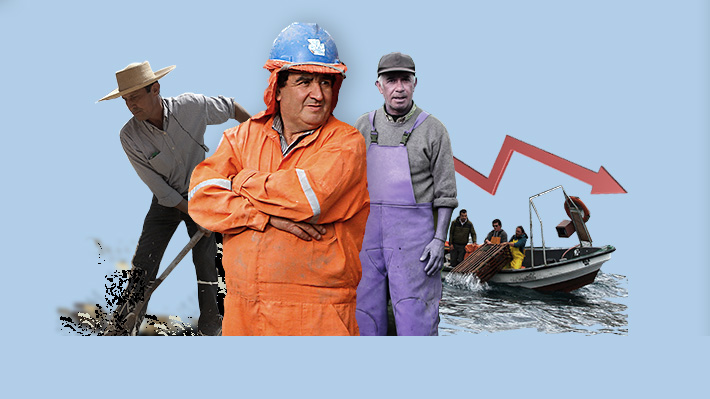
The ILO also warns that policy responses implemented so far have been uneven and fragmented, with an emphasis on short-term measures such as energy subsidies, cash transfers, and business support.
However, the organization points out that significant gaps remain in countries with less fiscal capacity or in conflict-affected contexts, where job and income protection is more limited.
Call for employment-focused action
The report underscores the need for coordinated, employment-focused responses that protect workers, businesses, and vulnerable sectors, especially those in the informal economy, migrants, refugees, and small businesses.
The ILO insists that these measures must be based on social dialogue and aligned with international labor standards to prevent a temporary energy crisis from leading to a prolonged deterioration of decent work globally.
The organization will continue to monitor the evolution of the crisis and its effects on labor markets as new data becomes available and international scenarios change.
You can also read: