

 dinero_admin
Gross Domestic Product (GDP) is one of a country’s most important economic indicators, as it measures the total value of all final goods and services produced within its territory during a specific period, usually a quarter or a year.
GDP allows us to understand the size of the economy and assess whether economic activity is growing, remaining stable, or slowing down. Its performance serves as a benchmark for governments, businesses, investors, and international organizations when making decisions.
The calculation of GDP includes the production of various sectors, such as agriculture, industry, commerce, construction, tourism, transportation, telecommunications, and financial services, among others. It does not consider the sale of used goods or financial transactions, as these do not represent new production.
When GDP registers growth, it means that the economy is generating greater production of goods and services. This is usually related to an increase in investment, household consumption, exports, and job creation. Conversely, when GDP declines over a prolonged period, it can reflect an economic slowdown, reduced business activity, and decreased consumption.
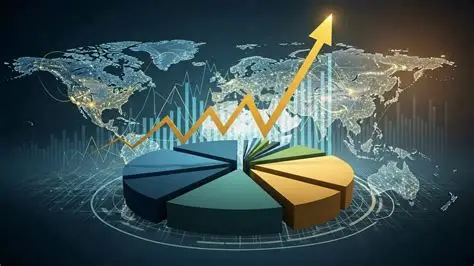
However, higher GDP growth does not automatically translate into a better quality of life for everyone. Even if an economy expands, challenges such as income inequality, poverty, or limited access to basic services may still exist. Therefore, GDP should be analyzed in conjunction with other economic and social indicators.
Factors that can boost GDP growth include increased household consumption, greater public and private investment, increased exports, tourism growth, and higher business productivity. Situations such as economic crises, natural disasters, international conflicts, or a drop in demand can negatively impact its performance.
In El Salvador, the Banco Central de Reserva (BCR) regularly publishes GDP figures to report on the evolution of the economy. These figures reveal which sectors grew the most, which faced difficulties, and how economic activity has changed compared to previous periods.
GDP also influences important decisions. Governments use it to design economic policies and prepare budgets; companies consider it before investing or expanding their operations; and domestic and foreign investors take it as a signal of the country’s opportunities and growth prospects.
In conclusion, Gross Domestic Product (GDP) is a fundamental tool for measuring an economy’s performance. While it doesn’t, on its own, reflect the well-being of the population, it does offer a clear view of a country’s productive capacity and is one of the main indicators for evaluating its economic development.
You can also read: