

 dinero_admin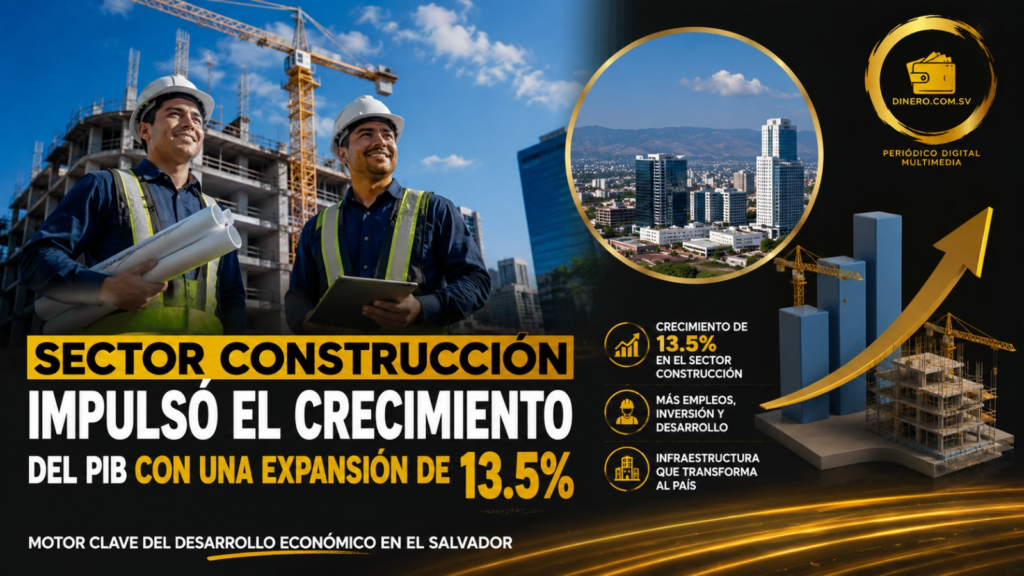
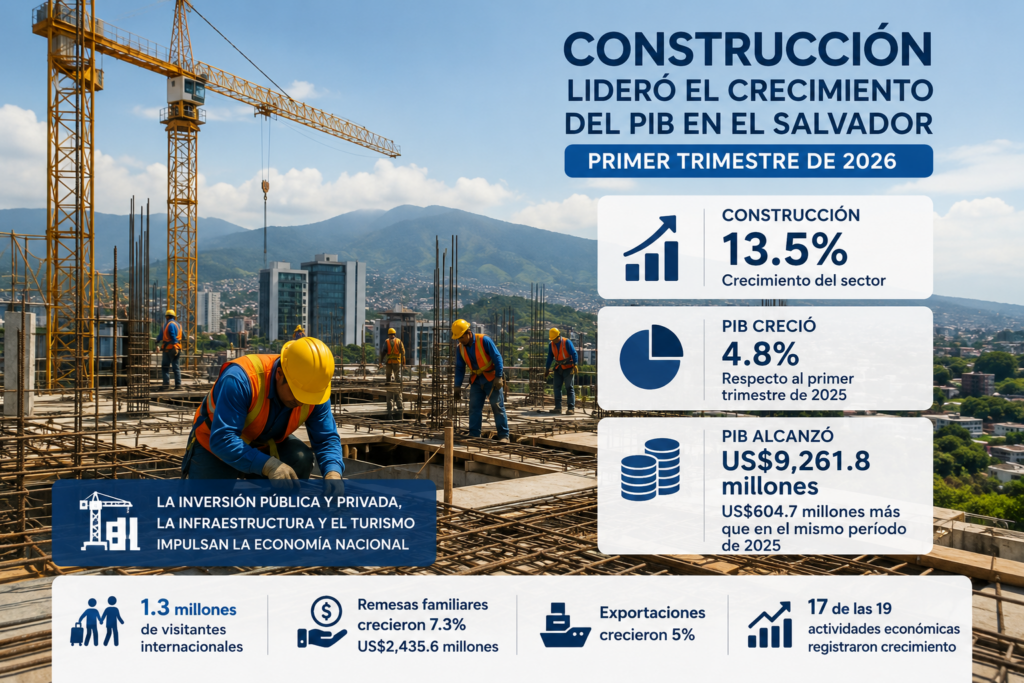
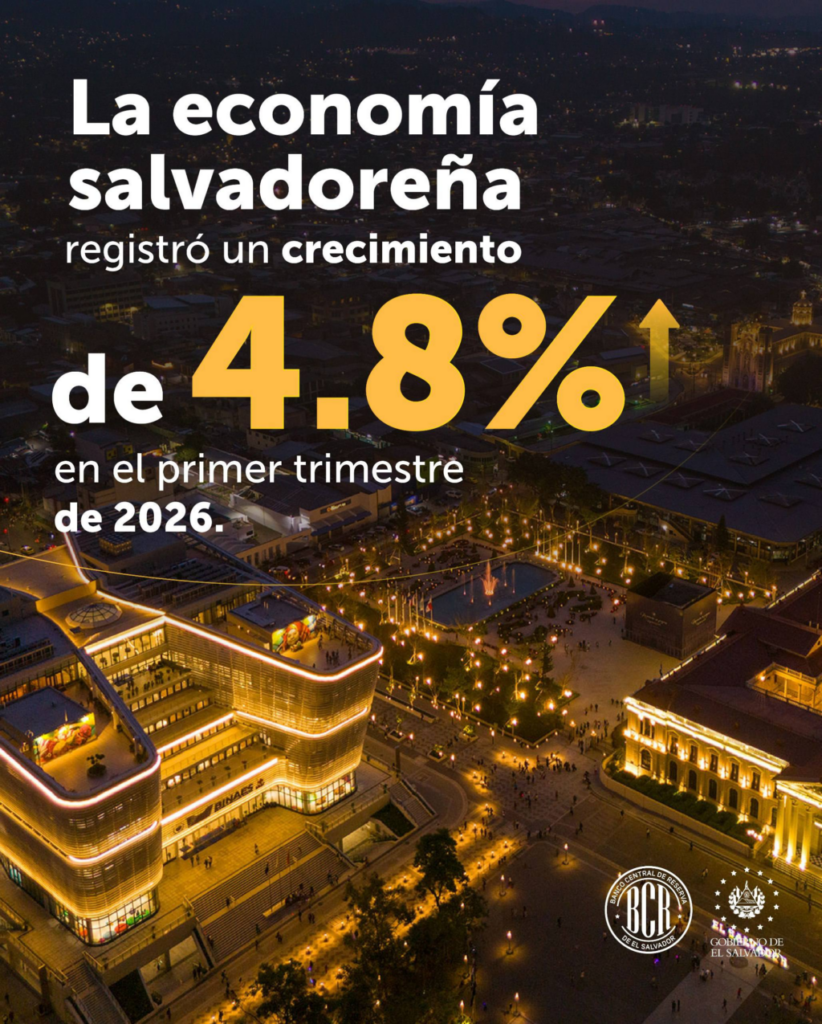
The construction sector was the main driver of El Salvador’s economic growth during the first quarter of 2026, recording a 13.5% increase, the highest among the country’s economic activities—according to the Banco Central de Reserva (BCR).This momentum contributed to a 4.8% increase in Gross Domestic Product (GDP) compared to the same period in 2025, reaching a value of US$9,261.8 million, equivalent to an increase of US$604.7 million.
According to the BCR, the sector’s performance was driven by the development of housing, commercial, and logistics projects financed by private investment, as well as by the execution of public infrastructure projects in the areas of education, roads, and airports. Among these, the construction of the Pacific International Airport stands out, considered one of the strategic investments to strengthen the country’s connectivity and economic development.
Growth in the construction sector also had a positive impact on other economic activities by increasing demand for materials, transportation, professional services, and labor, thereby strengthening production linkages and business activity.
The BCR noted that economic growth recorded during the first quarter of 2026 far exceeds the average observed in the first quarters of the past 17 years, which stood at 2.2%. In addition, 17 of the 19 economic sectors posted positive results, collectively accounting for 80.3% of the Gross Domestic Product.
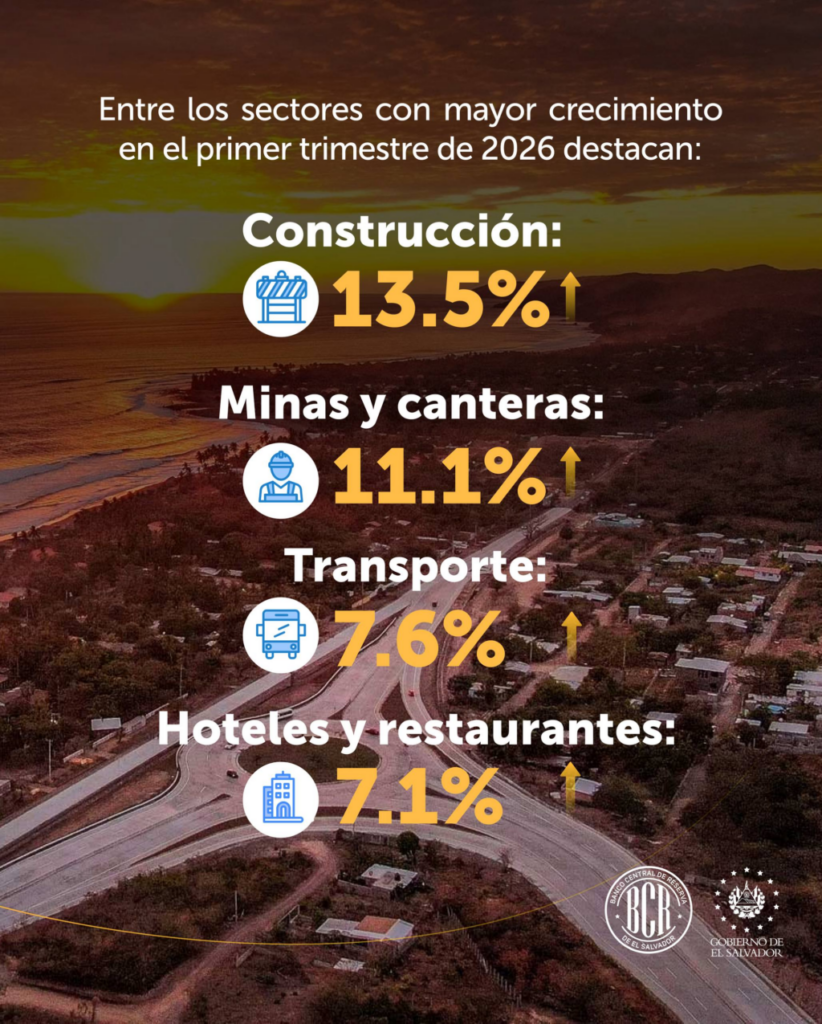
After construction, the sectors with the highest growth were mining and quarrying (11.1%), transportation and warehousing (7.6%), and hotels and restaurants (7.1%). Sectors such as healthcare, professional services, manufacturing, trade, real estate, and financial services also performed well.
The report notes that this performance was supported by an environment of increased public and private investment, the strengthening of logistics infrastructure, and improved foreign trade performance. In this context, exports of goods and services grew by 5%, while tourism remained robust, with 1.3 million international visitors arriving during the first quarter of the year.
Likewise, the 7.3% increase in family remittances, which reached US$2,435.6 million, bolstered household consumption and supported the performance of sectors such as retail, transportation, restaurants, and entertainment.
Overall, the Banco Central de Reserva (BCR) concludes that economic growth in the first quarter of 2026 was driven by investment, domestic consumption, foreign trade, and tourism, with the construction sector serving as the main driver of the expansion in national economic activity.
You can also read: