

 dinero_admin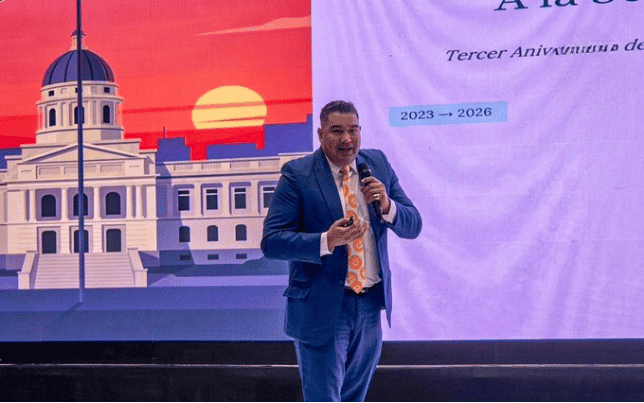
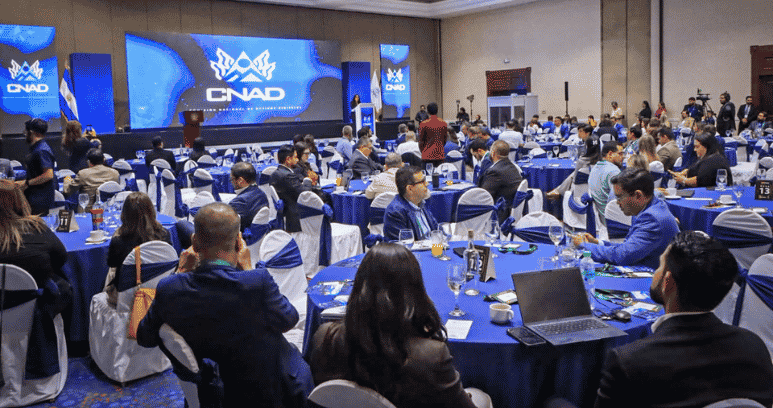
The National Commission of Digital Assets (CNAD) commemorated its third anniversary on September 21 with a forum that brought together businesspeople, representatives of international companies, and participants from the digital assets ecosystem, where it presented an overview of the industry’s growth and regulated issuances from El Salvador.
A regulator dedicated exclusively to digital assets
Juan Carlos Reyes, president of the CNAD, explained that the commission was created after the adoption of Bitcoin in El Salvador, after identifying that digital assets are not traditional financial instruments and require a specific framework. The entity works alongside the Central Reserve Bank and the Superintendency in regulating and supervising this sector.
During the event, Reyes highlighted that the Digital Assets Issuance Law made it possible to establish rules for the development of issuances and for the tokenization of different types of assets.
US$193 billion in digital asset issuances
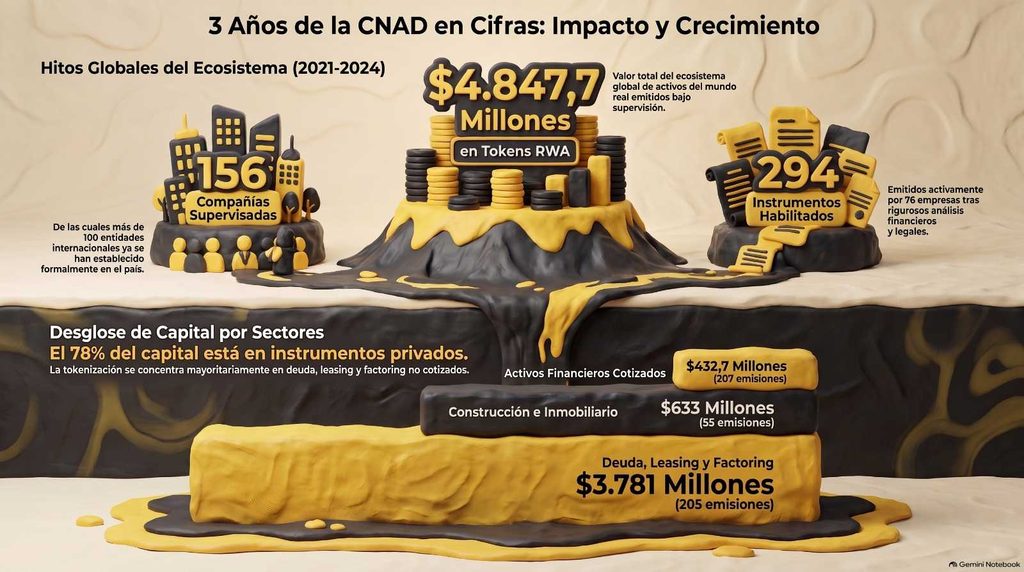
The CNAD has approved US$193 billion in digital asset issuances, a figure that includes stablecoins. Within that universe, US$3.781 billion corresponds to financing raised by companies through tokenization, according to the figure presented by the commission.
US$3.781 billion is concentrated in debt, leasing and factoring
As of September 4, 2026, debt, leasing, and factoring instruments not traded on stock exchanges accounted for US$3.781 billion distributed across 205 issuances. This amount represents 78% of the US$4.8477 billion issued globally in tokens backed by real-world assets (RWA) and does not include stablecoins.
Among the listed financial assets are products that are already listed on stock exchanges in the United States and that have also been brought into digital format through tokenization. Examples mentioned include tokenized shares of companies such as Apple and ETFs made available by companies such as TOHKN and Monetae.
On the other hand, unlisted assets comprise the other issuances that are not listed on a public stock exchange, including debt, leasing, and factoring instruments. For this classification, stablecoins are not considered unlisted assets.
A listed asset is traded in a public market, where its price can be determined by supply and demand. In contrast, an unlisted asset is not traded on a public stock exchange and may be structured through agreements between the parties.
Both types of instruments are covered by the Digital Assets Issuance Law and require registration and supervision by the CNAD.
Construction and real estate total US$633 million
Listed financial assets accumulate US$432.7 million across 207 issuances, while construction and real estate projects reach US$633 million through 55 issuances.
Together, the universe of RWA tokens authorized by the CNAD comprises 294 instruments issued by 76 registered companies. These include projects related to revenue, debt, and ownership, under continuous regulatory supervision.
Each issuance undergoes certification, registration, and financial, legal, and risk analysis processes before being authorized. Once authorized, it remains under CNAD supervision throughout its useful life.
Tokenization reaches investment projects
Reyes explained that among the issuances are projects from Salvadoran and foreign companies that have chosen to make their public offerings of digital assets from El Salvador.
The projects mentioned during the forum include initiatives to raise investment for real estate developments, Treasury bonds, and other products that have been brought into digital format through tokenization.
The president of the CNAD stated that during these three years, more than 100 companies have established themselves in the country and have issued debt through the commission.
Nearly 100 companies participated in the anniversary event
Of the 156 companies that, according to Reyes, are under CNAD supervision, nearly 100 participated in the anniversary event. The gathering also included representatives who traveled from Dubai, Spain, Argentina, and other Latin American countries.
For Reyes, the international participation reflects the interest generated by El Salvador’s digital assets ecosystem and the experience accumulated during the commission’s three years of operation.
Bitfinex highlights the sector’s development
Jerónimo Ferrer, a representative of Bitfinex, participated in the forum and discussed the work carried out by the company in El Salvador, particularly initiatives related to raising capital and other projects linked to digital assets.
During his participation, the importance of having a regulatory framework that allows companies to understand the applicable rules and develop projects within El Salvador’s ecosystem was also highlighted.
An ecosystem connecting international investments
José Rodríguez, partner and founder of Nodeman, explained that his firm identified an opportunity in 2021 to specialize in public and private investments related to digital assets.
Rodríguez said that the Salvadoran framework allows regulated global participants in El Salvador to interact with investors located in different parts of the world, under anti-money laundering standards and other controls.
The businessman added that they have worked with the commission since its early days and highlighted the development and maturity achieved by the ecosystem, with participants from different parts of the world and new technologies linked to financial innovation and the on-chain capital market.
“We are still on floor one”
Reyes stated that the development of tokenization is still at an early stage and that El Salvador already has experience in this field.
The president of the CNAD highlighted that the Digital Assets Issuance Law was created specifically for tokenization and noted that the issuances carried out so far demonstrate different ways of using this technology to channel investments and finance economic activities.
During the forum, he also highlighted the work of the institutions that have participated in developing the regulatory ecosystem and stated that the efforts of the Ministry of Economy, Central Reserve Bank, Superintendency, and other entities have contributed to the commission’s growth.
Businesspeople explore creating a digital assets industry association
As part of the gathering marking the CNAD’s third anniversary, businesspeople and representatives of companies linked to digital assets also met to discuss the possibility of forming a specialized industry association in the future.
The initiative comes from the business sector and is not part of the CNAD’s government-organized anniversary activities. The meeting among businesspeople seeks to explore mechanisms for organization and representation for a sector that has expanded its participation in the country’s digital assets ecosystem.