

 dinero_admin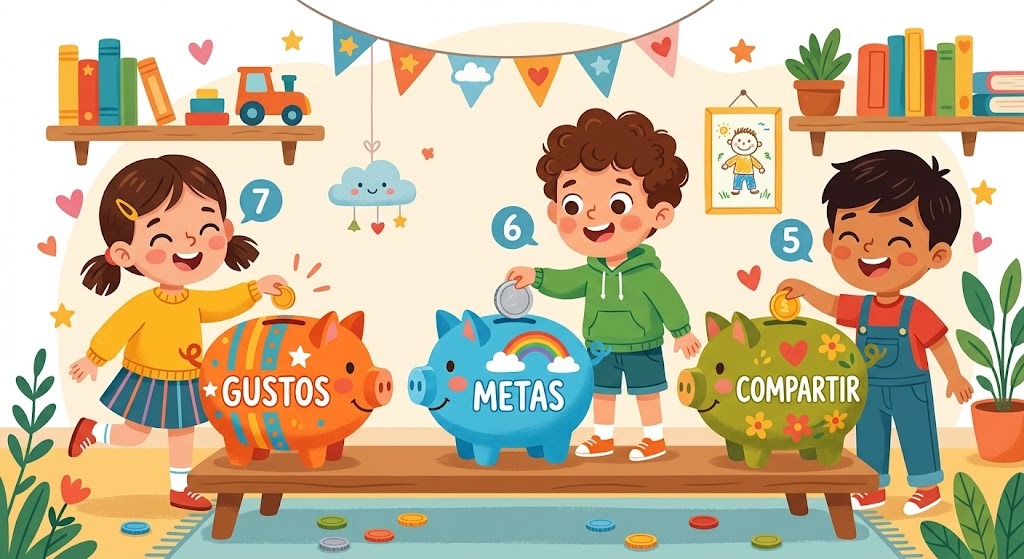
Teaching children to save can begin with simple tools that help them understand how to manage money from an early age. The Banco Central de Reserva (BCR) proposes using the “three piggy banks” method, an approach that divides money set aside for savings into three categories: personal wants and desires, specific goals, and sharing with others.
The first piggy bank is for personal wants and desires. Children can save money on it for small purchases they wish to make, such as a sticker, a small treat, or a small toy. This way, they learn that they can set aside a portion of their money to acquire something they want, rather than spending it immediately.
The second piggy bank is designed for setting savings goals. Here, the child can save money gradually to obtain something that requires a larger amount and more time, such as a bicycle, a special activity, or a more expensive toy. The goal is for them to understand that achieving certain things requires planning and persistence.
The third piggy bank is intended for sharing with others. The money saved can be used to buy a gift for a family member, purchase pet food, or help someone in need. This part of the method aims to help the child associate saving with the ability to use their resources to help others or do something kind for them.
The method allows children to distinguish that not all money needs to be used in the same way. By separating resources according to their purpose, they can begin to identify the difference between spending to satisfy an immediate desire, saving for a specific goal, and setting money aside to share.
According to the BCR, this activity also helps children understand that saving money involves making decisions. By establishing different purposes for their savings, they must consider what they want to buy, how long it will take to reach a goal, and how they can use part of their resources for the benefit of others.
Another lesson learned relates to patience and persistence. To reach a goal requiring more money, a child must save small amounts over a set period; this helps them understand that some objectives are not achieved immediately and require patience.
The three-piggy-bank method thus turns saving into a practical activity that is easy for children to grasp. Beyond simply teaching them to save money, this approach aims to foster, from an early age, the ability to make decisions, wait for what they want, and consider others, making saving a fun, everyday learning experience.
You might also like to read: