

 dinero_admin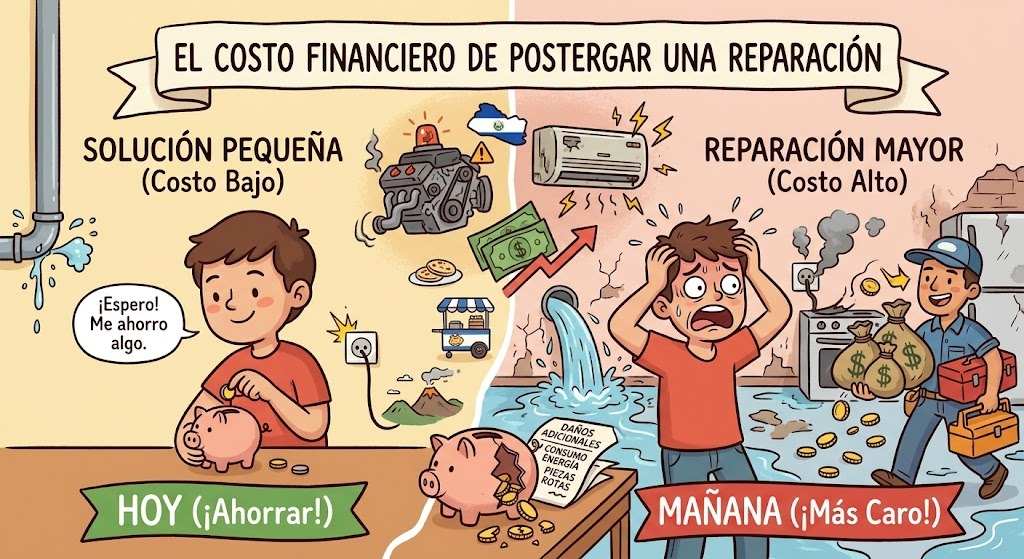
Postponing a repair might seem like a way to save money in the short term, but when a fault worsens, the final expense can be much higher. A water leak, an electrical issue, a vehicle problem, or an appliance malfunction can start as minor inconveniences and end up affecting other components or assets. Therefore, before deciding to wait, it is important to assess how much it might cost to fix the problem later.
The first aspect to consider is that a fault can lead to additional damage. For example, a water leak that is not addressed promptly can damage walls, floors, furniture, or other areas of a home. In such a scenario, the homeowner would not only have to pay to fix the leak but also to remedy the resulting consequences. The same principle applies to vehicles, equipment, and other assets when a defective part ends up affecting other components.
There is also a cost associated with how equipment operates. The U.S. Department of Energy notes that certain faults and a lack of maintenance in HVAC systems can increase energy consumption. For salvadoran households, this means that a malfunctioning appliance does not just represent an expense when the time comes to repair it; while it continues to operate inefficiently, it can also drive-up other household costs.
The situation can be even more critical when the asset is essential for generating income. A work vehicle, a computer used for business activities, or a tool required to provide a service can result in lost income if they stop working. In these cases, the cost of delaying the repair is not limited to the price of the service itself; it can also include the money the individual fails to earn while the equipment remains out of commission.
Safety is another factor that must be considered in the decision-making process. Deteriorated electrical wiring, a damaged structure, or equipment with a fault that could cause an accident requires priority attention. In El Salvador, the occupational health regulations of the Instituto Salvadoreño del Seguro Social include measures regarding the maintenance and safety conditions of facilities and equipment to prevent risks.
To prevent these expenses from disrupting family finances, it is advisable to include maintenance and repairs in the budget. Financial planning should account not only for monthly payments but also for occasional expenses. Having emergency savings allows you to handle a necessary repair without immediately resorting to a loan or credit card.
Before deciding whether a repair can wait, one option is to request a quote and compare it with the cost of replacing the item. It is also wise to ask what might happen if the equipment continues to be used in its current condition and whether the fault poses a risk to other parts. This information enables you to decide based on the total cost rather than just the initial repair price.
The key financial lesson is that postponing a repair does not always result in savings. If waiting worsens the damage, increases energy consumption, leads to lost income, or ultimately necessitates replacing the entire item, the initial savings can turn into a much larger expense. For salvadoran families, weighing the cost of repairing now against the potential cost of waiting can help protect the household budget and prevent a minor issue from escalating into a debt or a major unexpected expense.
You may also want to read: