

 dinero_admin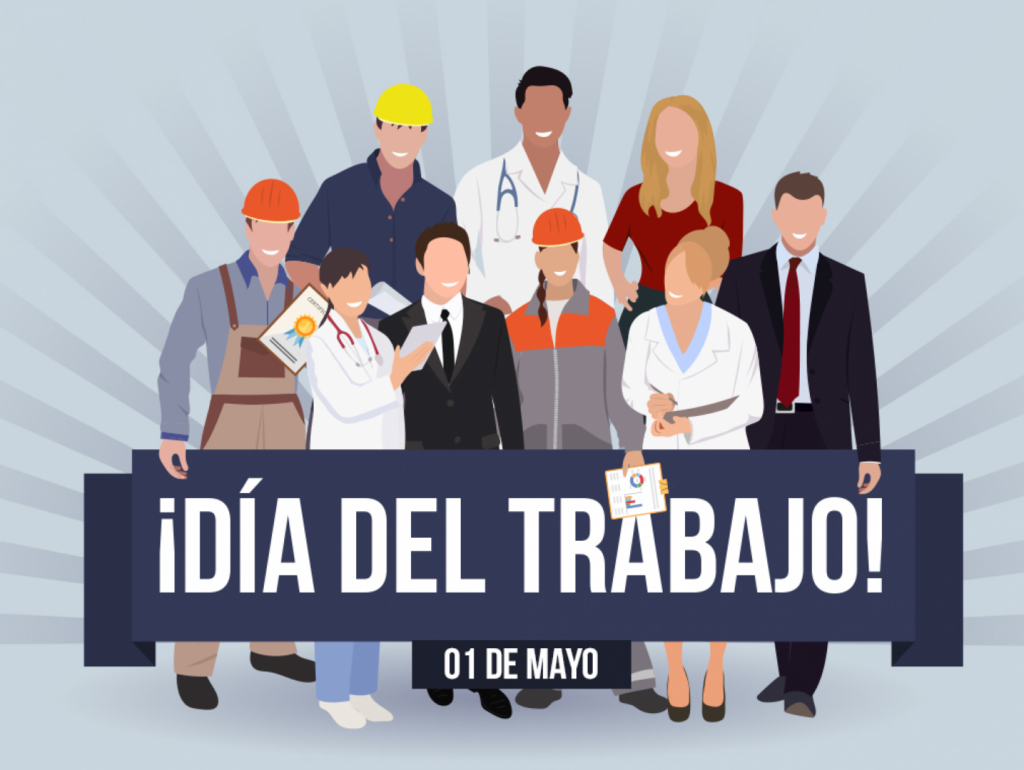
Every may 1st, El Salvador commemorates International Workers’ Day, a date dedicated to recognizing the contributions of workers and remembering the historical struggles that propelled labor rights that are now part of everyday life.
The origin of this commemoration dates to 1886 in Chicago, United States, when workers demanded an eight-hour workday amidst harsh working conditions. As a result of these struggles, in 1889 the Second International (an organization that brought together workers’ movements and parties from different countries to coordinate their labor demands) declared may 1st as International Workers’ Day, in homage to the so-called Chicago Martyrs.
In El Salvador, this date also acquired legal recognition. Since 1967, may 1st has been declared a paid national holiday for public and private sector workers, a decision aimed at officially recognizing the value of work, allowing the commemoration of the date, and extending the right to rest associated with Labor Day.
The declaration of a holiday also has a fundamental reason: to recognize that workers deserve their own day on the national calendar to honor their contribution to the country’s economic and social development.
Beyond its symbolic nature, the holiday has an important labor component, as it is linked to the recognition of rights. In El Salvador, the Labor Code designates may 1st as a paid holiday, and if a person works on that day, there are rules for their compensation.
Why is this date celebrated? Because many current labor rights are the product of historical struggles. Among the advances typically associated with these processes are the reduction of excessive working hours, rest periods, vacations, improvements in workplace safety, and greater protection for workers.
In El Salvador, the development of labor legislation has also had important milestones, such as the 1911 Law on Workplace Accidents, regulatory advances in the 1920s, and the creation of the Ministry of Labor in 1946, as part of an institutional evolution in labor rights.
One of the main benefits of this historic struggle has been to consolidate the idea that work is not just an economic relationship, but an activity that must be carried out with rights, protection and dignity.
This is where Labor Day also takes on meaning as a day that dignifies.
It dignifies because it recognizes the value of workers, makes their contributions visible, and reinforces principles such as fair wages, safe working conditions, stability, rest, and respect for rights.
It also has a social dimension: recognizing that behind economic growth are people whose work sustains businesses, institutions, services, and communities.
That’s why may 1st is not just a holiday or a day off. It’s a date with historical roots, legal recognition, and social significance.
In El Salvador, moreover, the fact that it has been declared a holiday reinforces this institutional recognition of workers, making the date part of the national calendar not only as a commemoration but also as a right.
More than a symbolic day, Labor Day reminds us that many rights were won, that work deserves dignity, and that those who sustain the country’s productive life with their efforts also have a day to be recognized.
You can also read: