

 dinero_admin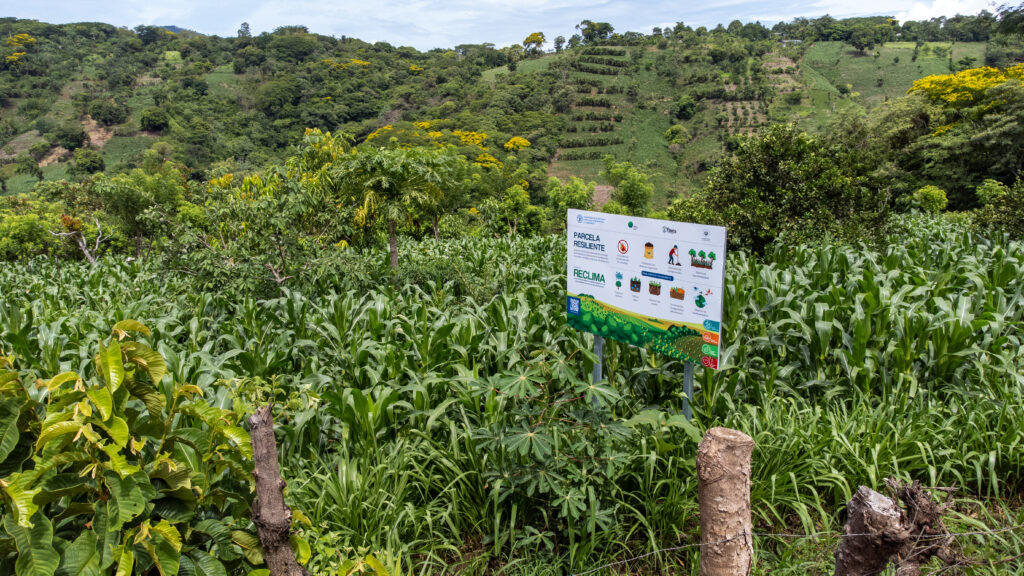
Moisture retention in fields has become a priority for the agricultural sector in the face of the dry season, as fields dedicated to staple grains and other crops require special agronomic management. To mitigate the impact of the lack of rain, technicians from the Ministerio de Agricultura y Ganadería (MAG) and Centro Nacional de Tecnología Agropecuaria y Forestal (CENTA) are training producers in the implementation of sustainable practices that optimize water use.
In the district of Tacuba, in Ahuachapán Centro, CENTA’s extension service serves 5,000 producers who cultivate approximately 10,000 manzanas (approximately 10,000 acres) of corn, beans, and sorghum; an area where demonstration plots stand out, and where agricultural burning has been eliminated.
With technical support, the implementation of soil and water conservation measures has been consolidated. Among these practices, living barriers stand out: dense rows of long-lasting plants sown at ground level to slow runoff; and hillside ditches, horizontal trenches designed to capture rainwater on sloping terrain.
These green infrastructures are complemented by infiltration pits to accumulate water and slowly moisten the roots; as well as agroforestry systems enriched with green manures, a combination of trees and crops with plants that are incorporated into the soil to increase its organic fertility.
Extension agent Douglas Molina recommended crop residue cover, which protects the topsoil and prevents erosion of arable land. He also said that the adoption of these good practices and the use of contour farming have allowed farmers to substantially increase their yields. Added to these ecological alternatives is the use of the canavalia plant, which acts as a living mulch that suppresses weeds and naturally provides nitrogen to the soil. In these areas, the use of conventional herbicides has been eradicated, replaced by bio-inputs for the agroecological control of pests and diseases. The use of reservoirs that ensure a constant water supply for supplemental crop irrigation is also being promoted.
Given the actions promoted by technicians from the Ministerio de Agricultura y Ganadería (MAG) and Centro Nacional de Tecnología Agropecuaria y Forestal (CENTA) producer Antonio Vásquez urged the sector to eradicate traditional burning practices and dependence on agrochemicals, since sustainable practices are necessary to restore soil health and strengthen resilience to climate change and the El Niño phenomenon.
You can also read: