

 dinero_admin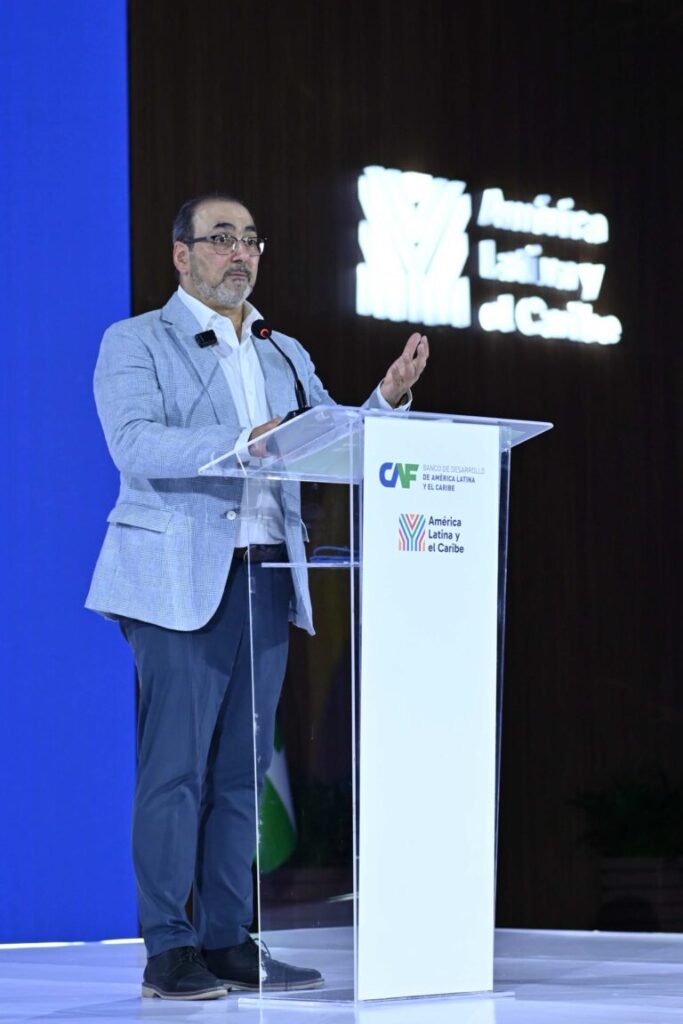
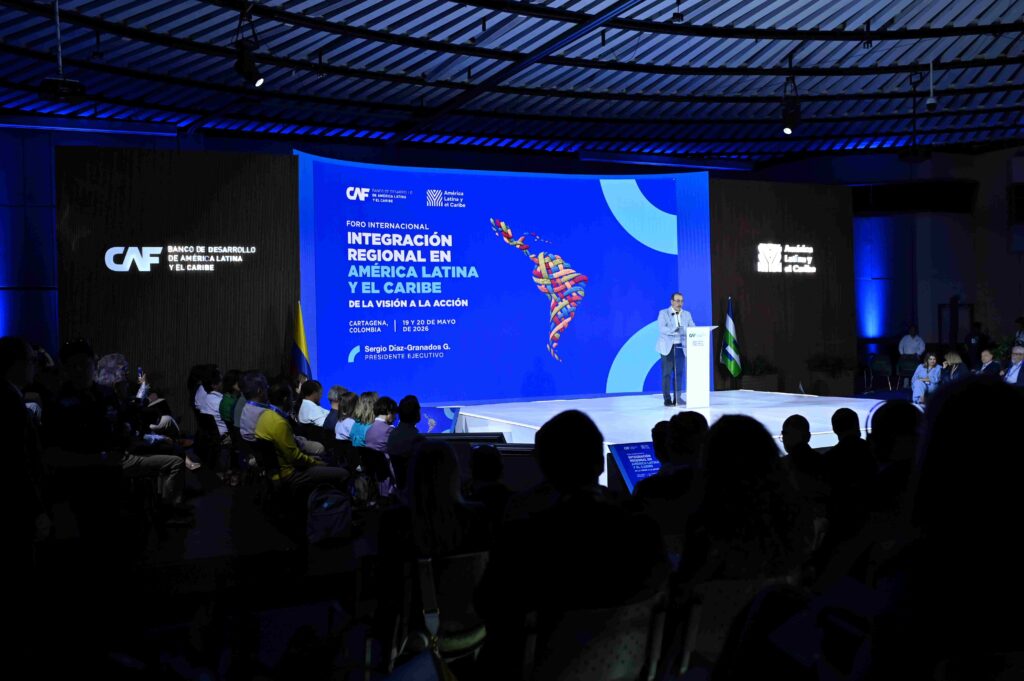
At the International Forum on Regional Integration, Sergio Díaz-Granados, Executive President of CAF—the Development Bank of Latin America and the Caribbean—announced a USD 10 billion investment through 2031 to finance regional integration projects. The funds will be allocated to strategic areas such as physical and digital infrastructure, intraregional trade, energy, tourism, innovation, logistics, and mobility.
Díaz-Granados emphasized that integration is “an imperative for the development, competitiveness, and global positioning of Latin America and the Caribbean”. In a context marked by geopolitical tensions, trade fragmentation, financial turbulence, and a new normal of uncertainty, the countries of the region must commit to regional integration to influence major global value chains, the energy transition, food security, and the new global production architecture.
“Integration is the answer to protecting our strategic ecosystems, generating employment, combating informality, and defending the democratic values that underpin our coexistence, freedom, and future”, said Sergio Díaz-Granados, Executive President of CAF.
The announcement comes after decades of progress. CAF’s first infrastructure project was the bridge over the Limón River, connecting Colombia and Venezuela. Over the past 30 years, the institution has approved 118 loan operations totaling USD 16.73 billion for integration initiatives. More specifically, in the last five years, CAF has deepened its vision toward physical, productive, digital, energy, and ecosystemic integration.
Examples of this include support for the Brasilia Consensus in 2023, the “Integration Routes” initiative with the IDB, BNDES, and FONPLATA to mobilize an additional USD 10 billion, and the creation of the “Latin America and Caribbean Region Brand”, which projects a shared narrative of solutions, talent, and biodiversity to the world.
Díaz-Granados also emphasized that the region is not starting from scratch. Among the advances, he mentioned the significant reduction of tariffs since the 1990s, the Mercosur-European Union agreement that brings together 770 million people, the development of regional electricity markets in Central America, the expansion of submarine cables such as the Humboldt and Firmina cables, and the recovery of tourism and intraregional air connectivity to pre-pandemic levels.
“Regional integration has already made progress, but now it must enter a more ambitious implementation phase. Fewer barriers, more infrastructure. Less analysis and more projects”, Díaz-Granados concluded.
You can also read: