

 dinero_admin
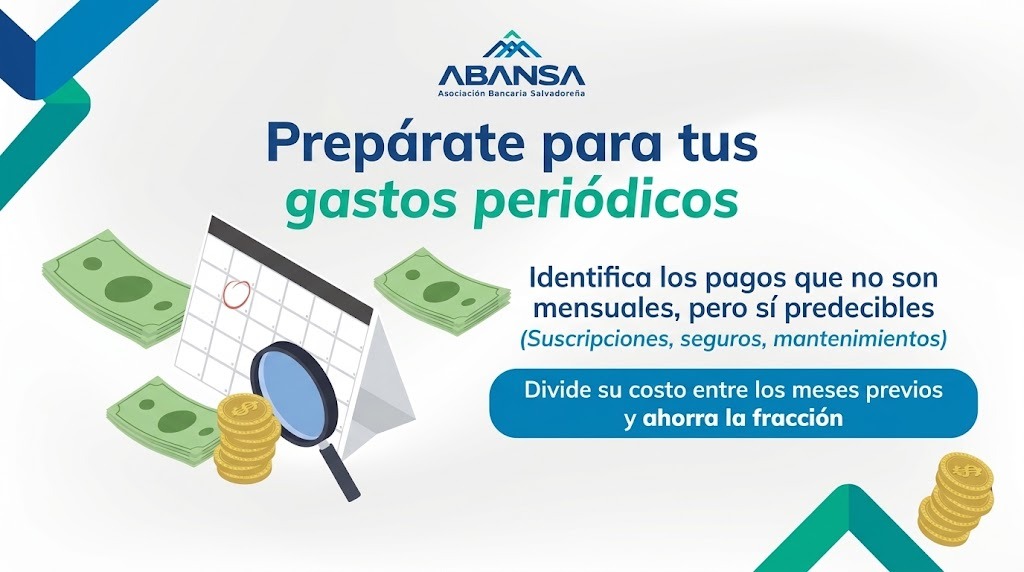
The Asociación Bancaria Salvadoreña (ABANSA) recommends identifying and planning for recurring expenses that are not paid monthly but can be anticipated, in order to avoid imbalances in the family budget and prevent the need to take on unplanned debt. The strategy involves spreading the cost of these obligations over the months leading up to their due dates and setting aside a fixed amount to cover them when the time comes.
These types of expenses often go unnoticed when drawing up a monthly budget because they do not occur as frequently as payments for basic utilities, food, or transportation. However, when the payment date arrives, they can put significant pressure on personal finances if no money has been set aside. Examples include annual subscriptions, insurance premiums, and maintenance costs for vehicles, homes, or other assets.
To prevent these difficulties, the first step is to make a list of the obligations that will need to be paid throughout the year. It’s a good idea to note the approximate amount of each expense, the due date, and how often it occurs. Having this information allows you to know in advance how much money will be needed and prevents these payments from being confused with extraordinary or unexpected expenses.
Once these obligations have been identified, ABANSA recommends dividing the cost of each one by the number of months remaining before it is due and setting that amount aside on a regular basis. For example, if a person needs to pay $240 for insurance in six months, they can set aside $40 each month. That way, when the renewal date arrives, they’ll have the necessary funds without having to use a significant portion of their income all at once.
The key is to incorporate this provision into the budget as if it were a monthly expense. To do this, you can transfer the money to a separate savings account or keep track of it as part of your personal financial management. The important thing is to avoid using those funds for other purposes and to keep a record of the accumulated amounts, especially when there are multiple payments with different due dates.
It’s also advisable to periodically review your budget and update the amounts set aside when prices change or new obligations arise. If an expense has a variable amount, it’s best to estimate it in advance and adjust your savings as the payment date approaches. This review helps keep your plan aligned with your available income and household needs.
Planning for these expenses also requires distinguishing between recurring expenses and emergencies. While the former can be anticipated and organized in advance, the latter do not always allow you to know in advance how much money will be needed or when it will be necessary to use it. Therefore, setting aside money for scheduled payments should be supplemented with an emergency fund that allows you to handle unexpected situations without compromising the budget allocated to other obligations.
Setting aside a monthly amount for recurring expenses allows you to better distribute your income, reduce financial pressure during months with higher expenses, and avoid unplanned debt. ABANSA’s recommendation is to make planning a habit in money management, so that known payments can be covered with saved funds without affecting the stability of the family budget.
You can also read: