

 dinero_admin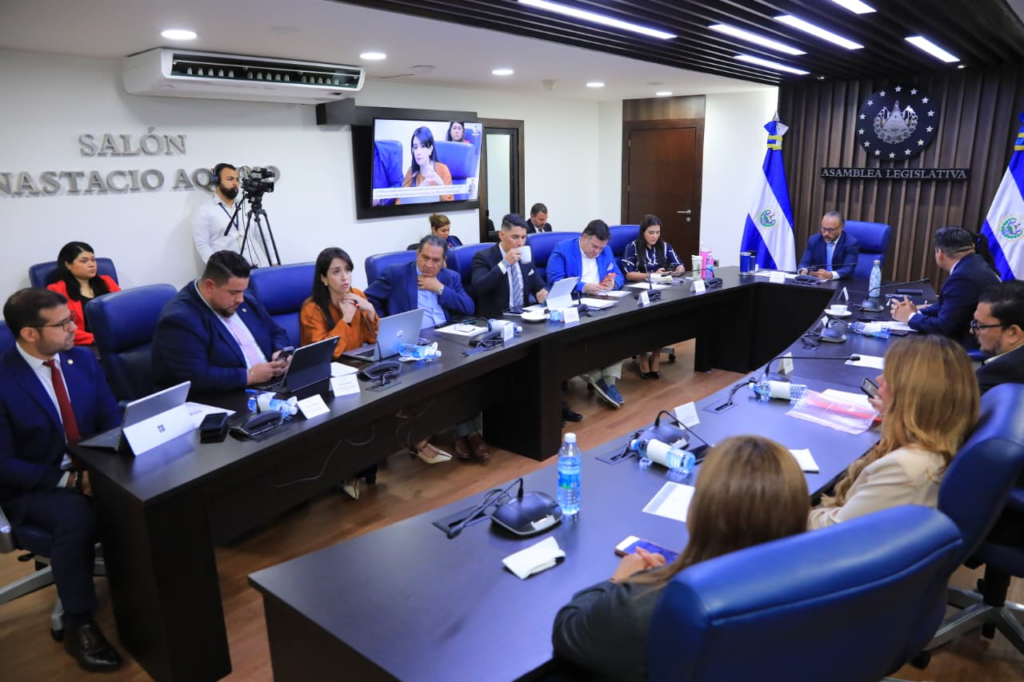
The Legislative Assembly’s Political Commission continues to move forward with the ratification process for amendments to Article 79 of the Constitution of the Republic, a reform aimed at ensuring direct representation of the salvadoran diaspora in the Legislative Branch.
The central objective of this amendment is to allow compatriots residing abroad whose address is registered outside the country on their Documento Único de Identidad (DUI) to vote directly for their own representatives. This would entail the creation of specific seats for the diaspora, something not previously provided for in the Constitution.
Until now, although salvadorans abroad were already able to vote (especially following the implementation of remote online voting), their votes were allocated to representatives from the department of San Salvador, regardless of their place of origin. This reform seeks to correct that mechanism and establish more equitable and direct representation.
During the study session, the legislators received technical input from various key institutions. Among them was Deputy Minister of Foreign Affairs Adriana Mira, who emphasized that the initiative reflects a government vision aimed at strengthening the political participation of the diaspora. As she explained, the goal is to settle a historic debt owed to millions of salvadorans who, for years, lacked effective mechanisms to influence the country’s decisions.

Along the same lines, the president of the Registro Nacional de las Personas Naturales (RNPN), Fernando Velasco, outlined the progress made in issuing the DUI abroad, a fundamental tool for compatriots to exercise their political rights. Currently, there are 24 service centers in various countries, primarily in the United States, where most of the diaspora is concentrated. In addition, online services for renewing and replacing documents are expected to be launched soon, which will further facilitate access.
Roxana Soriano, president of the Tribunal Supremo Electoral (TSE), provided an overview of the voter registry. Of the more than 6.4 million salvadorans eligible to vote, nearly one million reside abroad. This figure reflects the demographic weight of the diaspora and underscores the need to establish mechanisms of representation commensurate with its size and importance.
The amendment to Article 79 is also part of a series of measures adopted in recent years to strengthen the rights of salvadorans living abroad, such as the Special Law on Voting Abroad passed in 2022, and other regulations aimed at facilitating their connection to El Salvador.

However, the implementation of this direct representation poses technical and political challenges. One of the key issues will be determining how seats will be allocated without affecting the current distribution among the departments. The president of the Legislative Assembly, Ernesto Castro, has emphasized the importance of maintaining the total number of deputies at 60, while seeking a fair balance in representation.
The process still requires legislative ratification before the reform can take effect. If it goes through, it will mark a significant change in El Salvador’s political system by directly involving the diaspora in the country’s decision-making process.
With this initiative, El Salvador is moving toward a more inclusive model, in which millions of citizens abroad can not only vote but also elect representatives who respond to their interests and realities.
You may also read: