


 dinero_admin
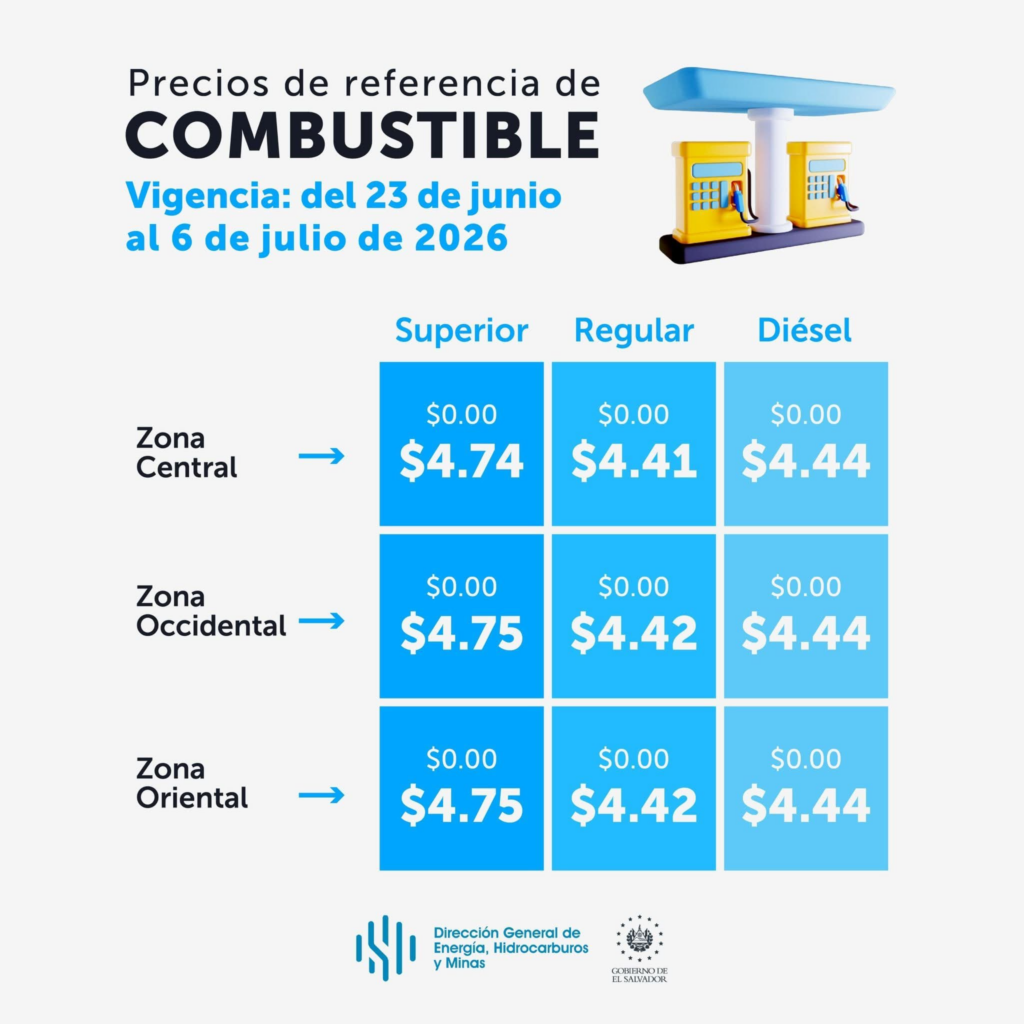
For the third consecutive two-week period, reference fuel prices in El Salvador will remain unchanged, reported the Dirección General de Energía, Hidrocarburos y Minas (DGEHM). The new prices will be in effect from june 23 to july 6, 2026, maintaining the same values recorded during the previous two two-week periods.
Premium gasoline will continue to cost US$4.74 per gallon in the central region and US$4.75 in the western and eastern regions. Regular gasoline will maintain a price of US$4.41 in the central region and US$4.42 in the western and eastern regions. Diesel will continue with a reference price of US$4.44 per gallon in all three regions of the country.
With this, salvadorans will complete a third consecutive two-week period without variations in reference fuel prices, providing stability for both private drivers and the productive and transportation sectors.
The DGEHM explained that this stability is due to the behavior of international hydrocarbon markets, influenced by various geopolitical factors. Among them is the suspension of negotiations to end the conflict between the United States and Iran, which has kept the international market on edge.
The institution also noted that Israel’s attacks against Hezbollah in Lebanon have generated greater uncertainty in energy markets, while Iran’s announcement of a new closure of the Strait of Hormuz has increased expectations of potential impacts on maritime freight rates and international prices of oil and its derivatives.
Authorities reiterated that the reference prices include legally mandated taxes, as well as the Contribución para la Estabilización de las Tarifas del Servicio Público del Transporte Colectivo de Pasajeros (COTRANS) and Fondo de Estabilización del Fomento Económico (FEFE).
Furthermore, the DGEHM reported that it maintains ongoing inspections at service stations to verify that the exact amount of fuel is dispensed and that it meets technical quality specifications. It also constantly monitors the hydrocarbon market and warned that companies that violate current regulations may be sanctioned, with the aim of protecting consumers and ensuring they receive the product they pay for.
You can also read: