

 dinero_admin
Photo: Google
The August holidays represent one of the busiest seasons for commerce and tourism in El Salvador. Thousands of people make purchases, book trips, use digital platforms, and make electronic payments—a scenario that is also often exploited by criminals to commit various types of scams.
Scams can occur both online and in person. Therefore, digital security specialists and financial institutions themselves recommend taking extra precautions to avoid financial losses and the theft of personal information.
One of the most frequent scams during this time involves fake offers of lodging, tour packages, and excursions. Scammers post ads with prices far below market value to attract victims and request deposits or advance payments. Once they receive the money, they disappear or block all communication.
Another common method involves the fraudulent sale of tickets for concerts, amusement parks, or seasonal events. In these cases, criminals offer nonexistent or already used tickets, especially through social media or messaging apps.
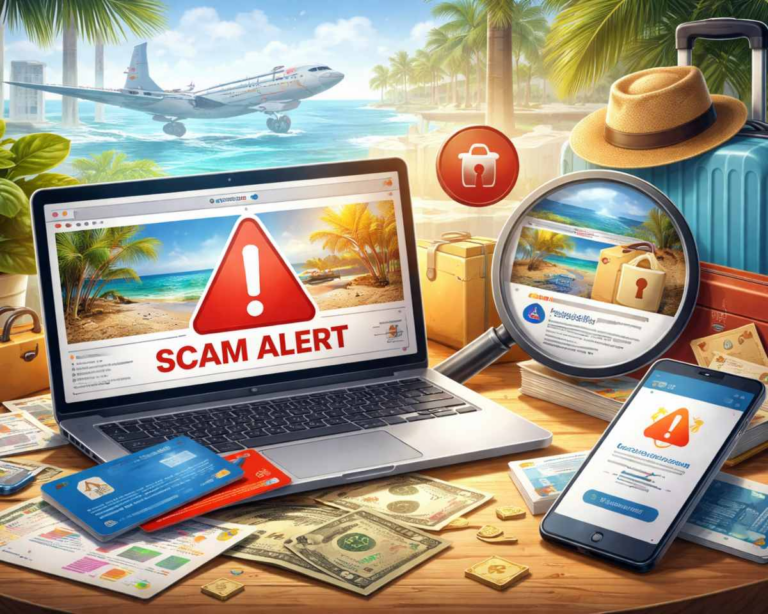
Photo: Google
Online shopping also poses a risk when done on unknown websites or profiles with no reputation. Some cybercriminals create websites that mimic well-known businesses to obtain bank card information or charge for products they never deliver.
During holidays, phishing attempts also increase. This technique involves criminals sending emails, text messages, or links that appear to come from banks, shipping companies, or government institutions. The goal is to trick people into revealing passwords, verification codes, or financial information.
Likewise, it’s important to be wary of phone calls in which supposed bank employees request passwords, card numbers, or codes sent via text message. Financial institutions remind the public that they never request this type of information by phone, social media, or messaging apps. To reduce the risk of becoming a victim of fraud, it is recommended to always verify that businesses or service providers are legitimate, check customer reviews, and confirm that payments are made only through official channels.
Photo: Google
It is also advisable not to share confidential information, activate bank transaction notifications, use strong passwords, and avoid connecting to public Wi-Fi networks when conducting financial transactions.
If you receive messages with overly attractive promotions, urgent requests for money, or suspicious links, it is best not to respond, not to open the links, and to confirm directly with the company or institution involved through its official channels.
Vacations are an opportunity to enjoy time with family and friends, but also to act with greater caution. Taking a few minutes to verify a purchase, a reservation, or a message can be enough to avoid a scam and protect both your money and personal information.
You can also read: