dinero_admin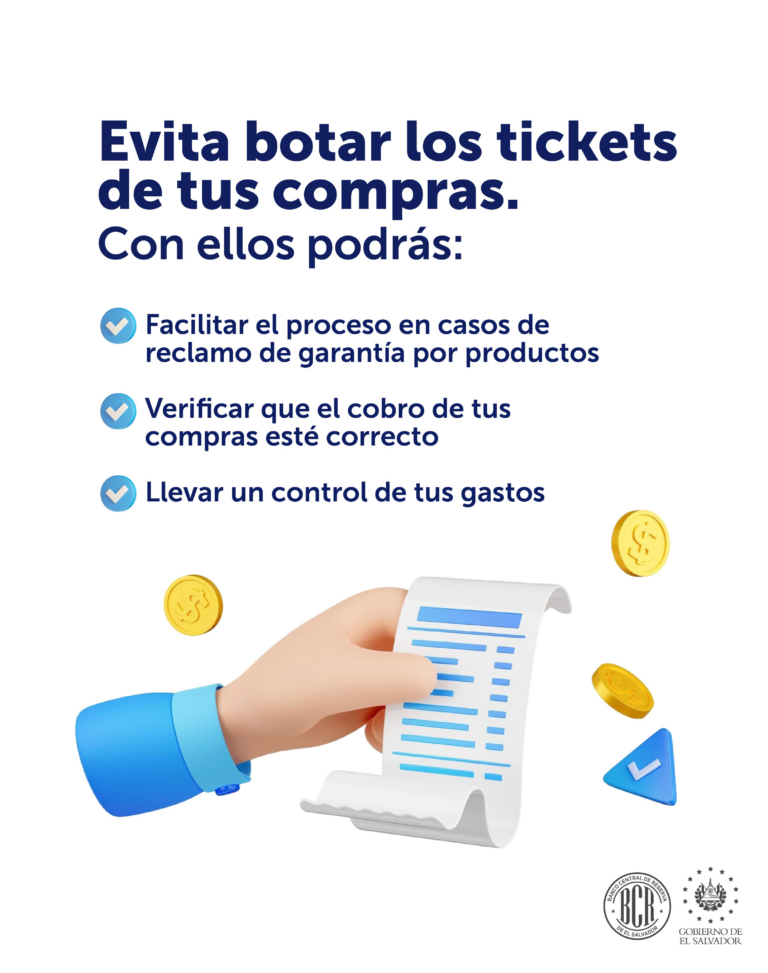
The BCR recommends that consumers keep their purchase receipts in a safe place, as these documents may be necessary for making claims related to product warranties.
According to information shared by the institution, receipts should be kept for the product’s warranty period or, as a guideline, between one and three months. Keeping them available allows you to prove when and where a purchase was made in case the item has a problem and it becomes necessary to request a review, repair, or replacement.

In addition to supporting warranty claims, receipts allow you to verify that the amount charged for a purchase is correct. Comparing the receipt with the advertised price or the charge recorded on your card or bank account can help detect incorrect charges and resolve them promptly.
The BCR also emphasizes that keeping these documents facilitates better expense tracking. Reviewing receipts allows you to identify how much money is spent on different purchases and maintain a record that can be used to organize your personal or family budget.

Therefore, a simple practice is to store receipts in a specific place, organized by date or type of purchase. It can also be helpful to keep a digital copy whenever possible, especially in cases where the physical receipt might be damaged or lost.
This recommendation is part of good financial literacy practices that aim to give consumers greater control over their money and provide them with support in case of any problems related to their purchases.
You can also read: