

 dinero_admin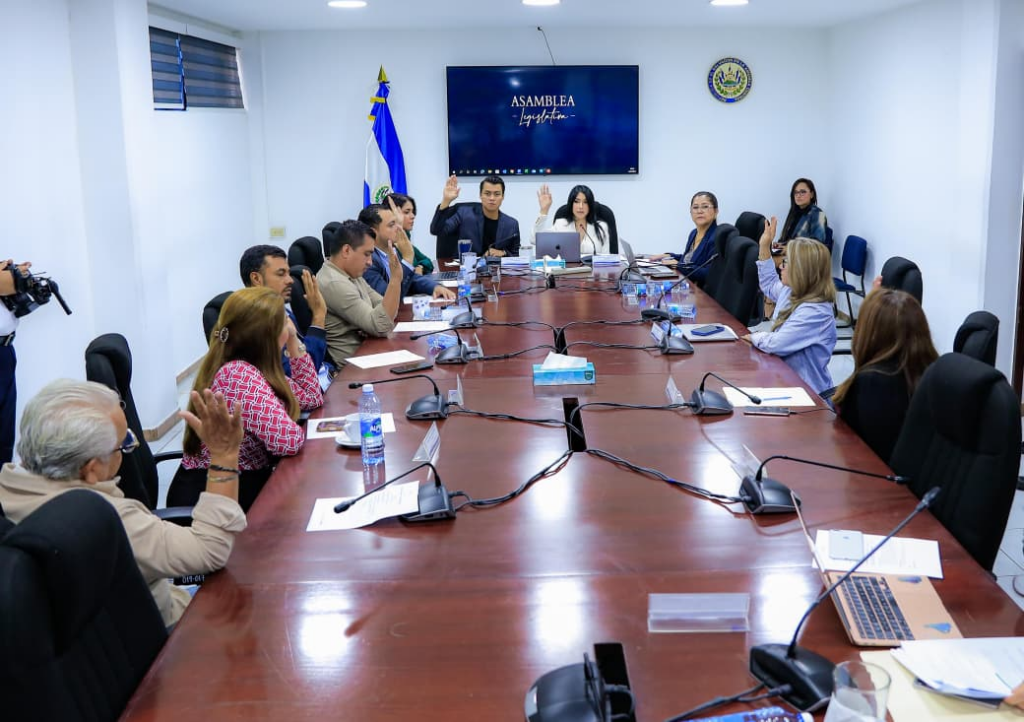
Reducing bureaucracy to expedite the establishment of public-private partnerships is one of the main objectives of the new regulatory framework under review, stated Rodrigo Ayala, president of the Agencia de Promoción de Inversiones y Exportaciones de El Salvador during his address to the Technology, Tourism, and Investment Committee of the Legislative Assembly.
The committee continues to analyze a proposal to create the Ley de Alianzas Público Privadas (APP), an initiative that seeks to modernize the current legal framework, boost investment, and expand the State’s capacity to execute strategic infrastructure and public service projects.
During the session, Ayala explained that one of the main current obstacles to developing these types of projects is the dispersion of responsibilities among different institutions, which causes delays in the processes. In this regard, he indicated that the proposal aims to centralize key functions in a single technical entity, to make management more efficient.
The official clarified that PPPs do not represent a privatization process, but rather a regulated mechanism to attract private investment and execute projects according to technical criteria. He explained that these schemes involve specialized evaluations, prequalification processes, and detailed studies before their approval.
The initiative envisions the creation of the Dirección Nacional de Alianzas Público Privadas (DAPP), attached to the Ministry of Finance, which will have technical autonomy and will be responsible for coordinating, evaluating, and supervising projects developed under this model.

Furthermore, the draft bill establishes a comprehensive regulatory framework that governs all phases of PPPs, from structuring and bidding to execution, operation, and contract termination, with the aim of guaranteeing efficiency, transparency, and quality of services.
One of the most relevant aspects is that contracts can last up to 50 years, depending on the nature of the project. The law also defines different modalities, including self-sustaining projects, financed by user fees, and co-financed projects, which include contributions or guarantees from the State.
Regarding the assets involved, the law contemplates contracts that utilize State assets and others in which the investor uses their own resources, which may or may not be transferred at the end of the contract.
Representative William Soriano highlighted that this model would allow for the identification of new investment opportunities, improve public services such as education, health, and infrastructure, and provide greater legal certainty for investors.
The legislator also emphasized that sectors such as construction could be strengthened, generating employment and boosting the economy. He said that the country is experiencing a favorable environment for investment, driven by improvements in security, which makes it necessary to have a legal framework that facilitates participation between the public and private sectors.

Furthermore, it was emphasized that the new law will not supersede the Constitution, so institutions such as the Fiscalía General de la República will retain their powers to protect state assets.
The draft bill also assigns the Ministry of Finance a key role in evaluating the fiscal risks and financial sustainability of projects, through the issuance of technical reports before their approval.
As part of the analysis process, the committee agreed to invite the Minister of Finance, Jerson Posada, to the next session to delve deeper into the financial aspects of the proposal.
With this initiative, the authorities seek to establish a more efficient and transparent framework that facilitates the execution of strategic projects, boosts investment, and contributes to the country’s economic development.
You can also read: