dinero_admin
The U.S. Embassy in El Salvador has issued a warning about the circulation of false information on social media related to a supposed “virtual work visa” program that would allow entry into the United States without a job offer.
According to the embassy, a video circulating on various digital platforms claims that a new visa mechanism will be available starting in april 2026 that would not require a consular interview or a formal job offer to apply.
However, the embassy clarified that there is no official information to support this alleged program and reiterated that the U.S. visa application process maintains its usual requirements.
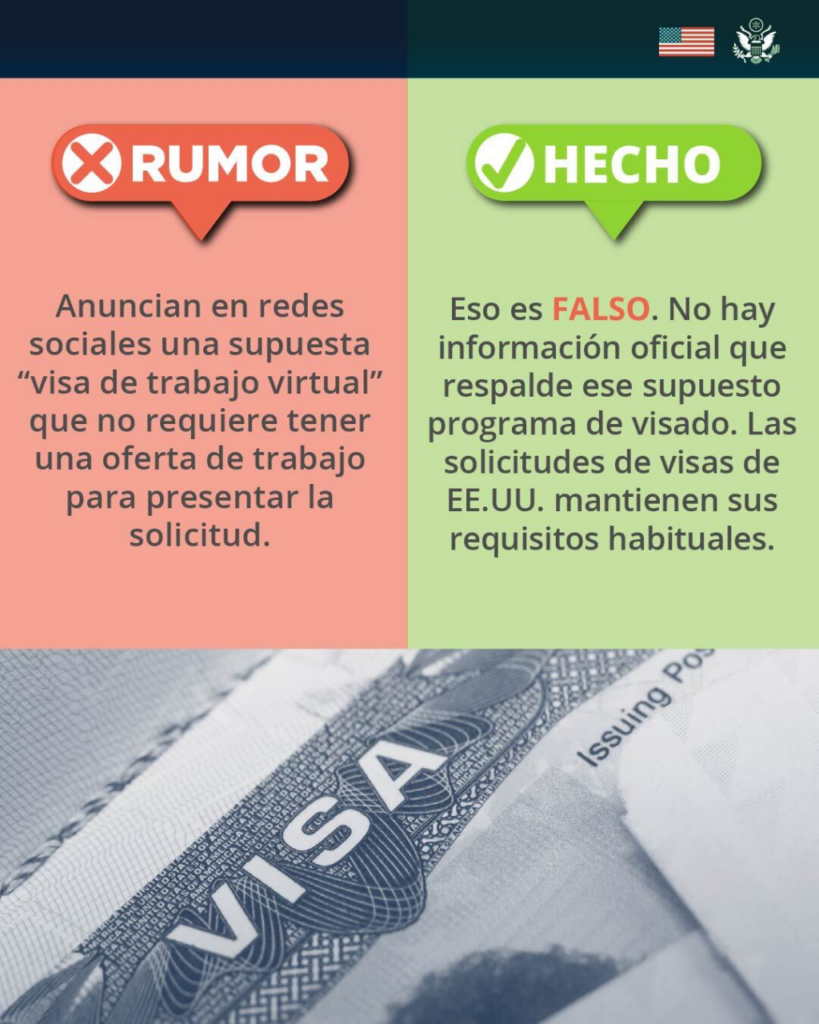
The embassy stated that one of the main red flags is that the viral content does not cite official sources or detail formal requirements, institutional channels, or specific conditions of the supposed process. Furthermore, the post omits basic information about immigration procedures, demonstrating a lack of verifiable support. Diplomatic authorities emphasized that any changes to immigration policies or visa programs are communicated only through official U.S. government channels, including institutional websites and verified embassy accounts.
The embassy also warned that such publications can generate misinformation and confusion among people interested in traveling or working legally in the United States, especially when they promise fast, simplified processes or processes without the usual requirements.
They recommended that the public always verify the authenticity of information before sharing it or initiating any immigration process, avoiding relying on content disseminated by unknown or unofficial accounts.
They also reiterated that visa applications continue to be subject to the procedures established by U.S. immigration authorities, including the required documentation and, in many cases, consular interviews.
The diplomatic mission emphasized the importance of consulting only official sources to obtain reliable information about visas, work permits, and other immigration processes, to prevent fraud, scams, or false expectations among users.
You can also read: