

 dinero_admin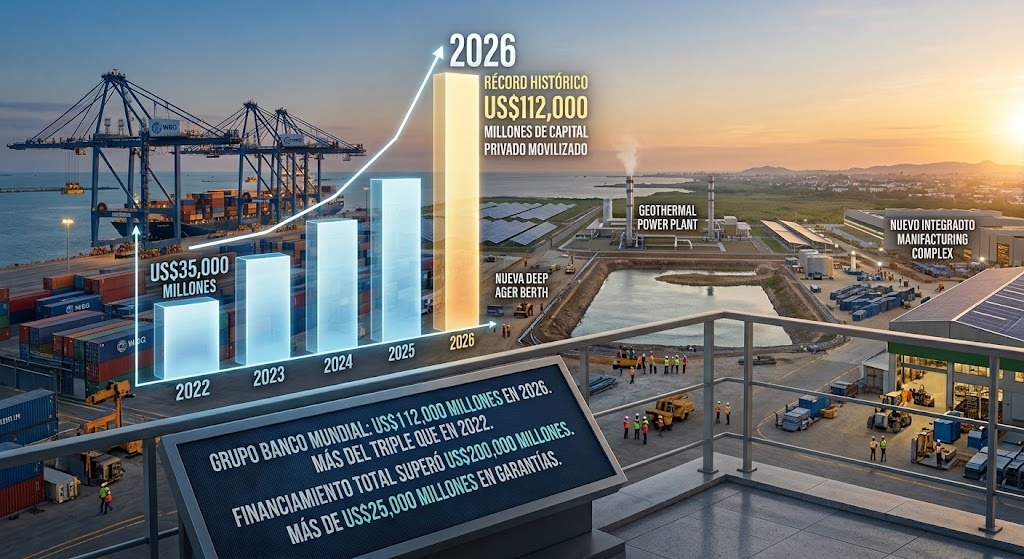
The World Bank Group (WBG) mobilized US$112 billion in private capital during the 2026 fiscal year—the highest amount recorded in its history—as part of a strategy to increase resources for developing economies. This figure is more than triple the US$35 billion mobilized in 2022.
When combining the WBG’s own resources with the mobilized private capital, total financing for developing economies exceeded US$200 billion during the 2026 fiscal year. The institution noted that this growth stems from changes implemented over the past three years to facilitate private sector participation.
By country group, capital mobilization for lower-middle-income economies rose from US$14 billion in 2022 to US$37 billion in 2026. For upper-middle-income countries, the figure increased from US$12 billion to US$50 billion, while for low-income countries, it remained around US$3 billion. In Africa, mobilized resources rose from approximately US$9 billion to US$22 billion.
The WBG attributes these results to a series of changes aimed at working more closely with the private sector. These measures include simplifying processes, better integrating the units working with the public and private sectors, and creating strategies tailored to each country’s development needs.
Additionally, the institution expanded the tools available to investors, including guarantees, local currency financing, and mechanisms to address currency exchange challenges. The Private Sector Investment Lab also helped identify obstacles hindering investment flows to developing economies and establish measures to address them. Another notable result was the issuance of over US$25 billion in guarantees during the 2026 fiscal year. With this figure, the WBG surpassed—four years ahead of schedule—its goal of reaching US$20 billion in annual guarantees by 2030. This growth was driven primarily by the WBG Guarantee Platform, established in 2024 to facilitate client and investor access to these instruments.
For World Bank Group President Ajay Banga, the goal of increasing private capital mobilization is linked to the need to create more opportunities and jobs in developing economies. The institution estimates that 1.2 billion young people will reach working age over the next 10 to 15 years, while only around 420 million jobs are projected to be created.
Given this scenario, the WBG’s employment strategy focuses on three areas: investment in human and physical infrastructure, the creation of business-friendly regulatory conditions, and support for private sector growth. It also prioritizes five sectors with the potential to generate jobs on a large scale: infrastructure and energy, agribusiness, health, tourism, and value-added manufacturing. In 2026, 55% of total financing—including the Group’s own resources and mobilized capital—was allocated to these areas. The institution is now seeking to expand the pool of participating investors to channel more long-term capital into projects and companies in developing economies.
You may also read: