

 dinero_admin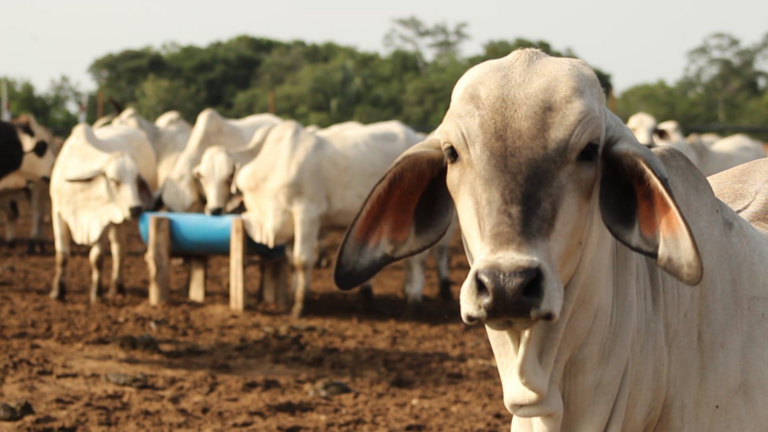
Drought is no longer just an environmental challenge. For thousands of micro and small enterprises (MSEs) in the agricultural sector, its effects translate into lower incomes, increased costs, and a greater risk to the continuity of their businesses.
When discussing the El Niño phenomenon, attention is usually focused on reduced rainfall, prolonged dry spells, and damage to crops. However, for rural micro and small enterprises, the impact goes far beyond the fields: it is reflected in the increased cost of water, livestock feed, crop losses, higher input costs, and decreased sales, directly affecting the economy of thousands of families.
According to the report “Current State of Micro and Small Enterprises 2023: The Other Side of the Economy”, prepared by the Micro and Small Enterprise Observatory of the LID School of FUSAI, 87.1% of entrepreneurs in the agricultural sector depend on their business as their main source of income, the highest percentage among all productive sectors. This figure surpasses commerce (78.2%), production, and transportation (70.2% and 69.3%, respectively), demonstrating that any climate-related impact jeopardizes the economic livelihood of thousands of households.
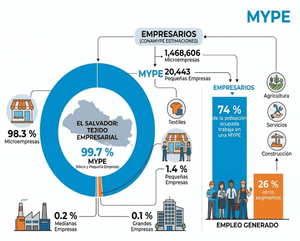
Although agricultural micro and small enterprises represent approximately 59,558 economic units, equivalent to 7% of all micro and small enterprises, they are among the most vulnerable sectors due to their dependence on water availability and stable production.
Two realities facing the same phenomenon
The impact of El Niño is not the same for all rural businesses. While some have the resources to adapt, others face difficulties that threaten their survival.
Larger farms, with greater financial capacity, can invest in water reservoirs, irrigation systems, technical assistance, and crop planning. For them, climate variability represents a risk that can be managed through timely investments.
In contrast, subsistence farms, where the home also serves as a place of production and sales, lack the resources to implement adaptation measures. In these cases, water scarcity forces them to make critical decisions, such as selling livestock prematurely, reducing production, or resorting to debt to continue operating.
This difference demonstrates that resilience to climate change depends, to a large extent, on the economic capacity of each business.
Anticipation as a business strategy
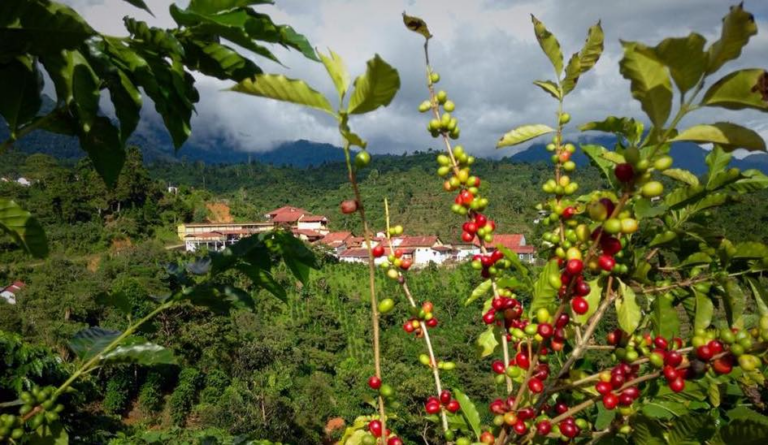
Coffee farmer Bryan Martínez, owner of El Refugio Coffee, represents an example of how planning can reduce the impact of climate change.
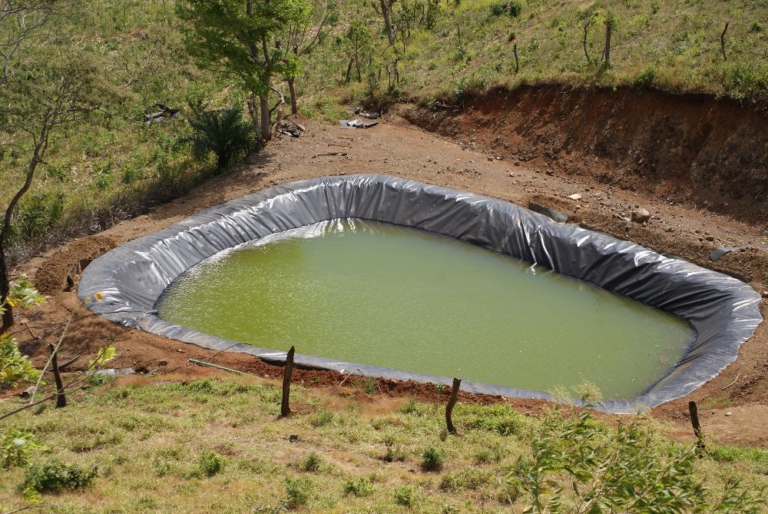
Thanks to his participation in the AL-INVEST Verde program and his MBA training at FUSAI’s LID School, he has incorporated sustainable practices such as rainwater harvesting, the construction of raised banks, and techniques to improve soil water recharge.
According to the producer, these actions not only strengthen environmental conservation but also increase productivity, reduce the incidence of pests and diseases, lower production costs, and ensure better water availability during the dry season.
However, specialists warn that these types of strategies require investment, access to knowledge, and financing—conditions that are beyond the reach of most rural microenterprises.
Adapting requires investment
The recommendations from the Ministerio de Agricultura y Ganadería (MAG), such as the construction of artisanal reservoirs, rainwater harvesting, and storage for irrigation and animal consumption, aim to promote a culture of drought prevention.
However, implementing these measures requires financial resources that many production units lack. While for some companies they represent a viable investment, for others they remain difficult to implement without financial support and technical assistance.
The impact reaches the entire economy
The consequences of lower agricultural production are not limited to the producer. Decreased harvests lead to shortages of raw materials, increase prices, and affect the supply of other economic sectors.
The impact extends to small agribusinesses, pupuserías (food stalls specializing in pupusas), cafes, neighborhood stores, and other businesses that depend on agricultural products to maintain their daily operations. In this way, a climatic phenomenon that begins in the countryside ends up impacting urban economic activity.
A challenge for public policy
Data shows that preparing for El Niño is no longer just an environmental issue; it has become an economic challenge for agricultural micro and small enterprises (MSEs).
Experts believe that strengthening the sector’s resilience requires differentiated policies. Larger businesses need instruments that facilitate investments in adaptation, such as green credit, technical assistance, and timely climate information.
In contrast, subsistence farms require broader support that combines access to water, technical assistance, and social protection programs, since financing alone could increase their vulnerability.
In a scenario marked by climate variability, the sustainability of thousands of microenterprises will depend not only on their ability to adapt but also on the implementation of policies that reduce existing gaps and guarantee the continuity of one of the most important sectors for El Salvador’s rural economy.
You can also read: