

 dinero_admin
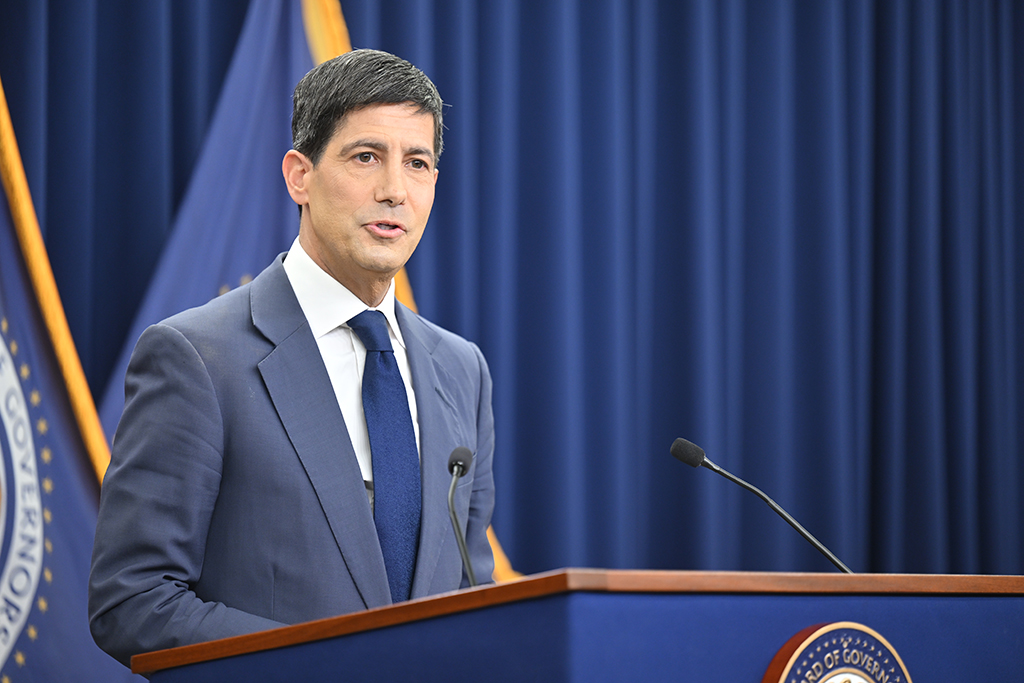
The U.S. Federal Reserve (Fed) kept interest rates unchanged in a range of 3.5% to 3.75%, Chairman Kevin Warsh announced wednesday during the press conference following the Comité Federal de Mercado Abierto (FOMC) meeting. Although the decision was in line with market expectations, the institution’s new projections point to possible rate hikes before the end of the year due to persistent inflation.
During his remarks, Warsh reiterated that price stability will remain the Fed’s top priority and acknowledged that inflation continues to be well above the central bank’s 2% target.
“We recognize that inflation has been well above the 2% target for more than five years. Persistently high prices represent a burden for Americans”, he said.
The Fed’s new economic forecast raised its inflation estimate for this year to 3.6%, while core inflation, which excludes energy and food, was revised upward to 3.3%, reflecting continued high price pressures.
In contrast, the US economy is maintaining solid growth. The Fed projects GDP growth of 2.2% this year and 2.3% in 2027, while the unemployment rate is expected to remain around 4.3%.
One of the main announcements from the meeting was the elimination of forward guidance, a tool used to anticipate potential future monetary policy moves for the markets. According to Warsh, future decisions will depend on the evolution of economic data and not on advance signals issued by the institution.
The officials’ projections also reflect a leaning toward a more restrictive monetary policy. Of the 18 members who submitted interest rate forecasts, nine believe at least one rate hike will be necessary before the end of the year, while eight favor keeping rates unchanged and only one anticipates a cut.

Although the recent easing of tensions in the Middle East has helped alleviate some of the pressure on energy prices, the Fed believes it is still too early to declare inflation under control.
With rates currently between 3.5% and 3.75%, the institution maintains a cautious stance as it assesses price developments and economic activity. Markets will be watching the Fed’s next meeting, scheduled for six weeks from now, for further indications of the direction of U.S. monetary policy.
You can also read: