

 dinero_admin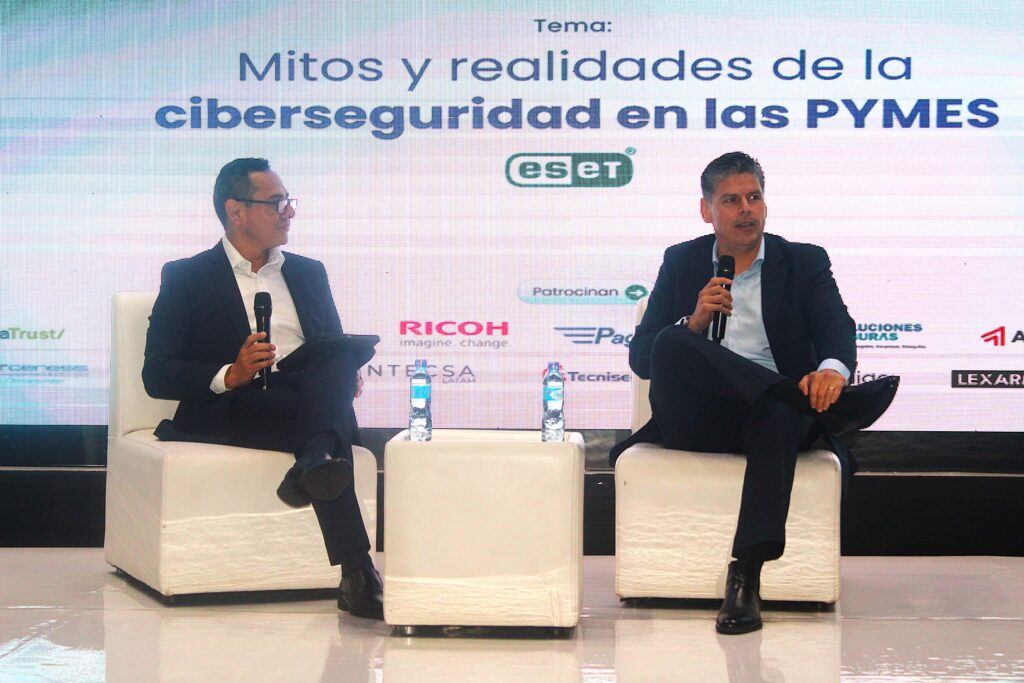
Many companies, including SMEs, still perceive cybersecurity as an expense, when in it should be seen as an investment. This change in perspective is key, since a critical breach can even lead to bankruptcy and the permanent closure of a company. This was recently stated by Benjamín Carpio, country manager of ESET El Salvador, during CyberWeek 2026, organized by the Cámara de Comercio e Industria de El Salvador (Camarasal).
CyberWeek aims to bring cybersecurity closer to businesses in a practical and applicable way. Experts in the field participated in the event, sharing trends, risks, and tools so that organizations of all sizes can protect their information, prevent attacks, and strengthen their digital resilience.
“Cybersecurity doesn’t depend solely on technology, but also on the decisions we make within our companies: how we train our teams, how we prevent attacks, and how prepared we are to respond. That’s why, now more than ever, we must see it as an investment in peace of mind, continuity, and trust”, says Leticia Escobar, president of the Cámara de Comercio e Industria de El Salvador (Camarasal).
Based on ESET’s work with SMEs in El Salvador, Carpio estimates that “only 3% of the total budget is allocated to technology, and of that percentage, approximately 10% is for cybersecurity”. Furthermore, one of the main myths among SMEs is the belief that they will never be victims of a cyberattack. Nothing could be further from the truth, adds the executive.
The country manager of ESET El Salvador warns that, after almost two years of digital transformation with the implementation of electronic invoicing and signatures, the use of digital platforms, applications, and artificial intelligence (AI), among other advancements, companies are increasingly vulnerable to vulnerabilities. “Digital transformation constantly exposes us, and while technology and AI are often discussed, cybersecurity is overlooked. This is a risk that can even lead to a company’s closure”, says Carpio.
In this context, the rapid adoption of artificial intelligence is transforming business models across all sectors. It is estimated that by 2030, this technology will contribute $16 trillion to the global economy, equivalent to 14% of global Gross Domestic Product (GDP), solidifying its position as one of the main drivers of growth and competitiveness.
According to IBM’s Global AI Adoption Index, 82% of organizations worldwide have already integrated this technology into their processes; of these, 42% actively use it in their operations, and 40% continue to expand its implementation. In this scenario, the conversation no longer revolves solely around innovation, but also around how to manage it responsibly.
Furthermore, Carpio also warned that SMEs often act as suppliers to large supply chains, so responsible AI management has become a requirement for remaining competitive.
A chatbot error that exposes private data or an inventory algorithm that makes erroneous decisions due to a lack of oversight can lead a small business to bankruptcy, whether through legal penalties or the loss of key contracts. Establishing these controls allows small and medium-sized enterprises to demonstrate to their business partners that their technology is professional and secure, leveling the playing field against larger competitors. Therefore, Carpio reiterates: “Let’s stop seeing cybersecurity as an expense and start seeing it as an investment”.
To learn more, visit ESET at: https://www.welivesecurity.com/es/investigaciones/ngate-brasil-fraude-nfc-handypay/
ESET also invites you to check out Conexión Segura, its podcast, to learn what’s happening in the world of cybersecurity. Listen here: https://open.spotify.com/show/0Q32tisjNy7eCYwUNHphcw
You can also read: